

Do you want to know what sustainable fashion is and what we can do to put it into practice? Keep reading because we’re going to share everything you need to know so you can have a sustainable wardrobe!
The fashion industry has been for years the second industry that most pollutes the environment. In the search to minimize its impact and live in harmony with the environment, a series of measures and practices derived from sustainability have been implemented.
To achieve sustainability, it is essential to reduce CO2 emissions, avoid overproduction, limit pollution and waste, support biodiversity, and ensure that workers earn fair wages and have safe working conditions. Buying pieces labeled «sustainable» can be very expensive for many people, not to mention that very few brands have managed to achieve all the goals of sustainable fashion. For this reason, it is important that we become aware of the life cycle that we can give to our pieces before discarding them. Luckily, there are many practices we can adopt to make our wardrobe sustainable.
Learn about different ways to put sustainable fashion into practice:
1. Invest your money wisely
Focus on less quantity and better quality. This way we avoid the overproduction of clothing and the exploitation of natural resources as valuable as water. According to data from the United Nations Organization, the fashion industry is responsible for 20% of the total waste of water globally. To produce a pair of jeans, 7,500 liters of water are required.

2. Shop at thrift stores
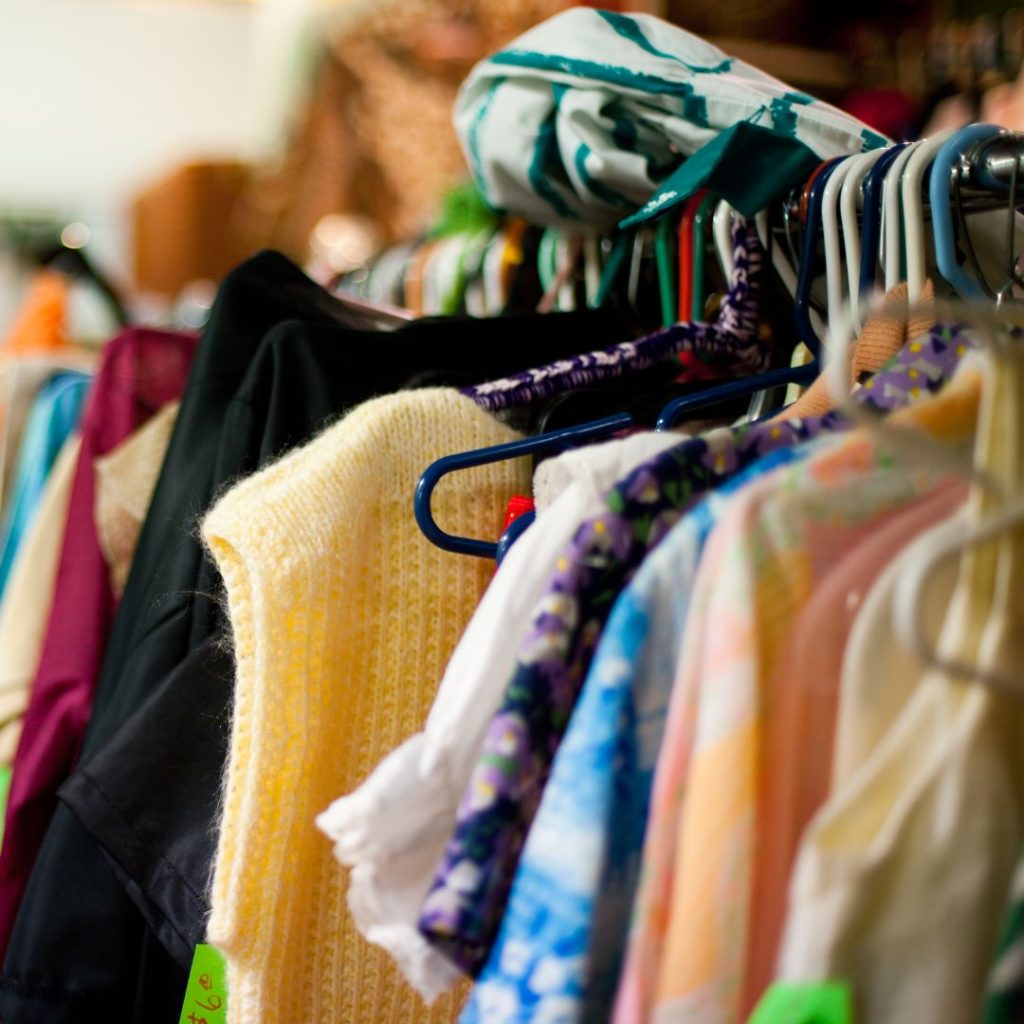
More and more people are choosing to wear second-hand clothes, achieving a very vintage style. In Puerto Rico there are some stores that you can visit like Electroshock, and Johnny & June. If you prefer online shopping, you can check out websites like Sale Chop Chop and Depop, where you can buy and/or sell used parts in good condition.
3. Rent clothes that you will only wear for special occasions
There is no need to have a new dress for every special event. A good choice is to rent fashionable clothes without spending a fortune just to leave it in your wardrobe. There are many reliable and safe options for renting clothes. One of the most popular today is Rent the Runway.
4. Avoid ”greenwashing”
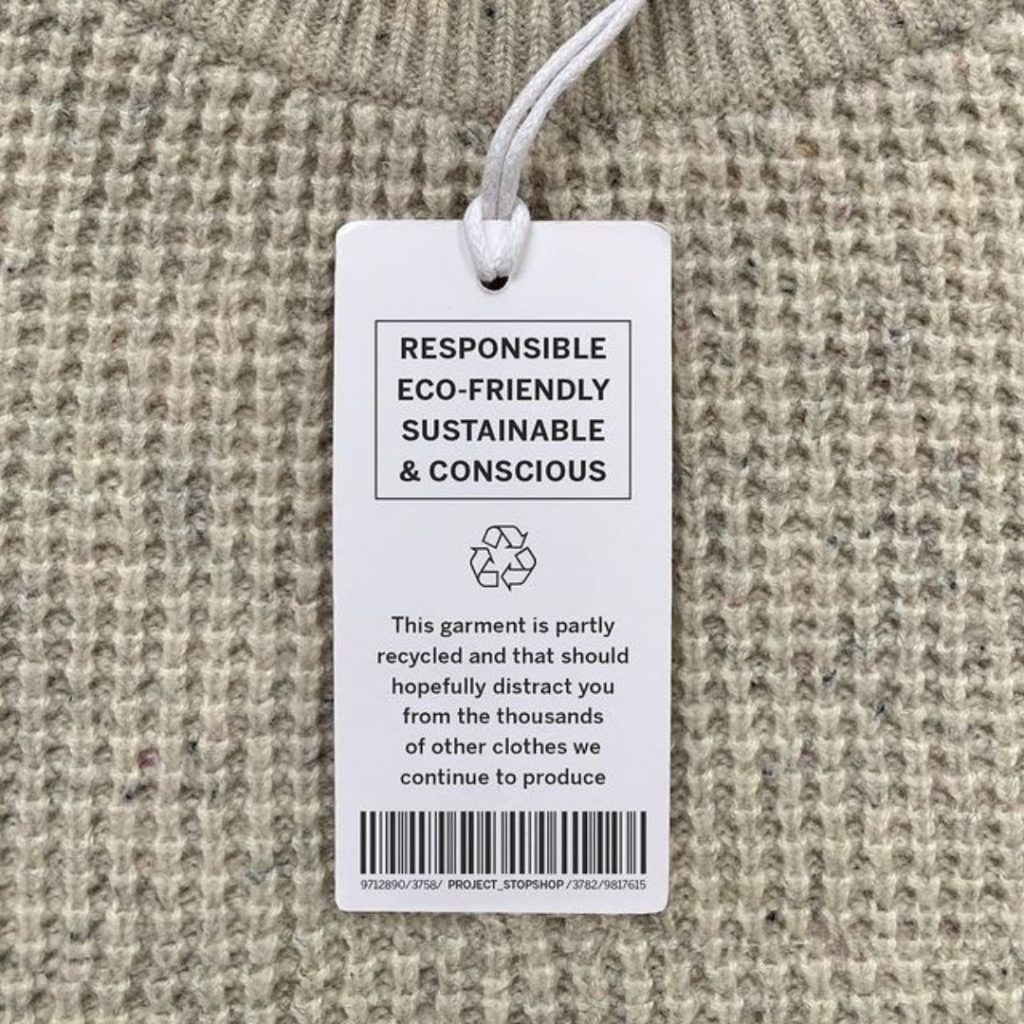
Greenwashing refers to the massive declarations of companies that claim to be on the path of sustainability but at the end of the day, carry out practices such as large-scale garment production. Brands use terms such as: ‘sustainable’, ‘eco’, ‘conscious’, ‘responsible’, among others, to define products or capsules within the brand, even though they maintain abusive and polluting practices with the rest of the brand. their products. Find out if brands have detailed policies that support what they advertise before you buy.
5. Zero Waste as a pattern making technique
Zero Waste is a textile pattern-making technique with the objective to minimize fabric waste in the pattern-making and cutting of garments. This design technique invites us to create awareness that there is no unnecessary fabric or non-useful fabric.
First of all, reflect on the design of each piece taking into mind the pattern cutting process to reduce or discard textile waste. You can reuse the leftover or excess fabric in other pieces, such as smaller accessories, bags, finishes and/or appliqués. Some designers choose to rescue the remains of dead material that has been discarded by large clothing factories, avoiding generating new waste.
The packaging process is another aspect to consider. Use waste-free packaging like recycled paper boxes, recycled or compostable plastic bags, and cloth bags made from recycled fabric.
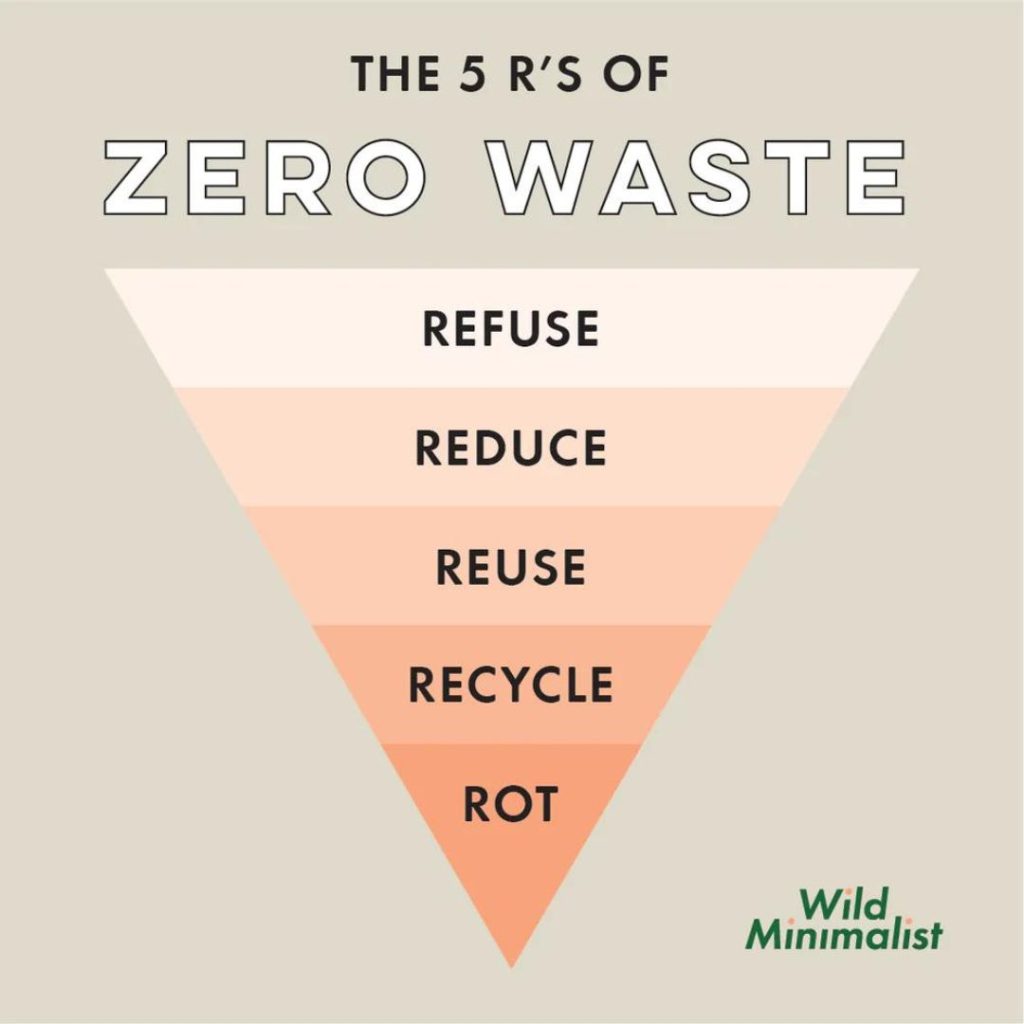
Another tip is to apply the 5 R’s of Zero Waste, in the elaboration of garments. Reject, reduce, reuse, recycle and reintegrate.

6. Educate yourself
There are international movements such as the Fashion Revolution, where information is collected for the benefit of consumers and transparency in the production of the textile industry is advocated.
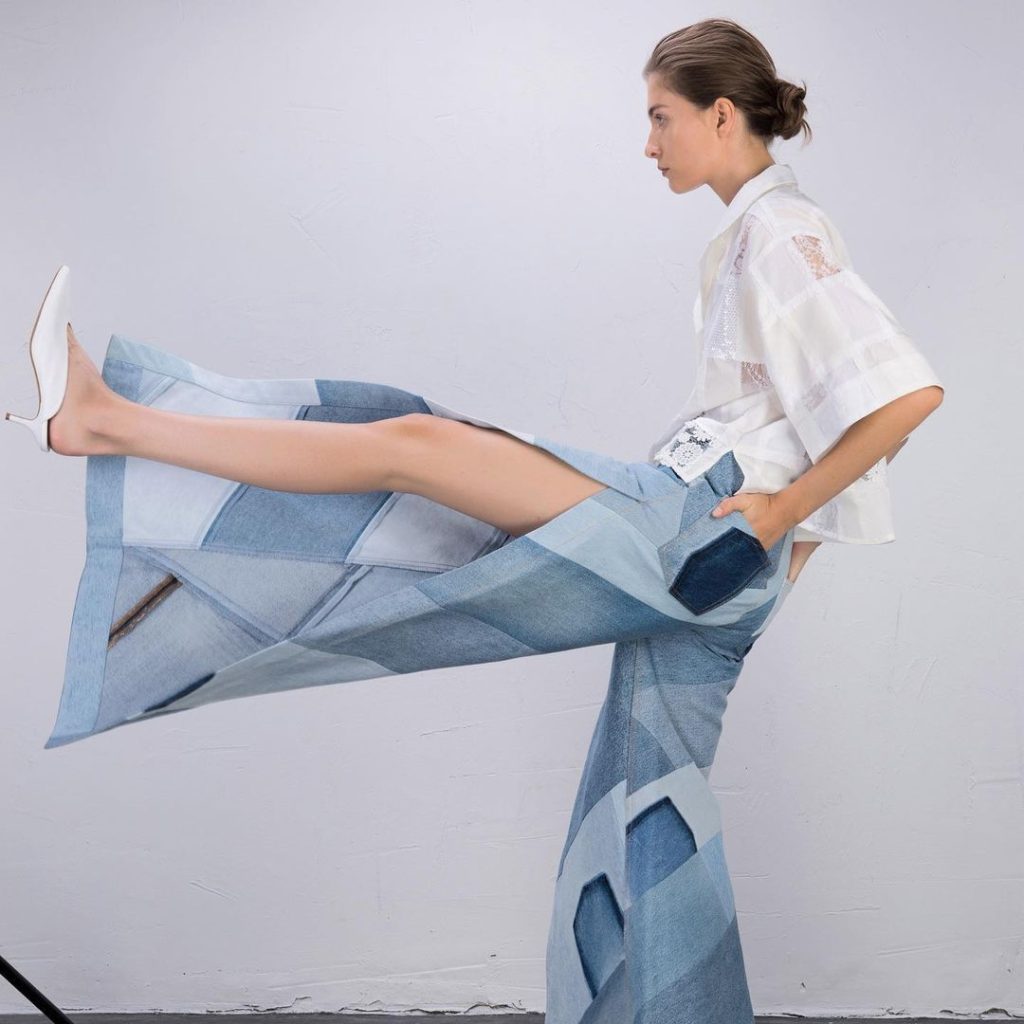
7. Upcycling
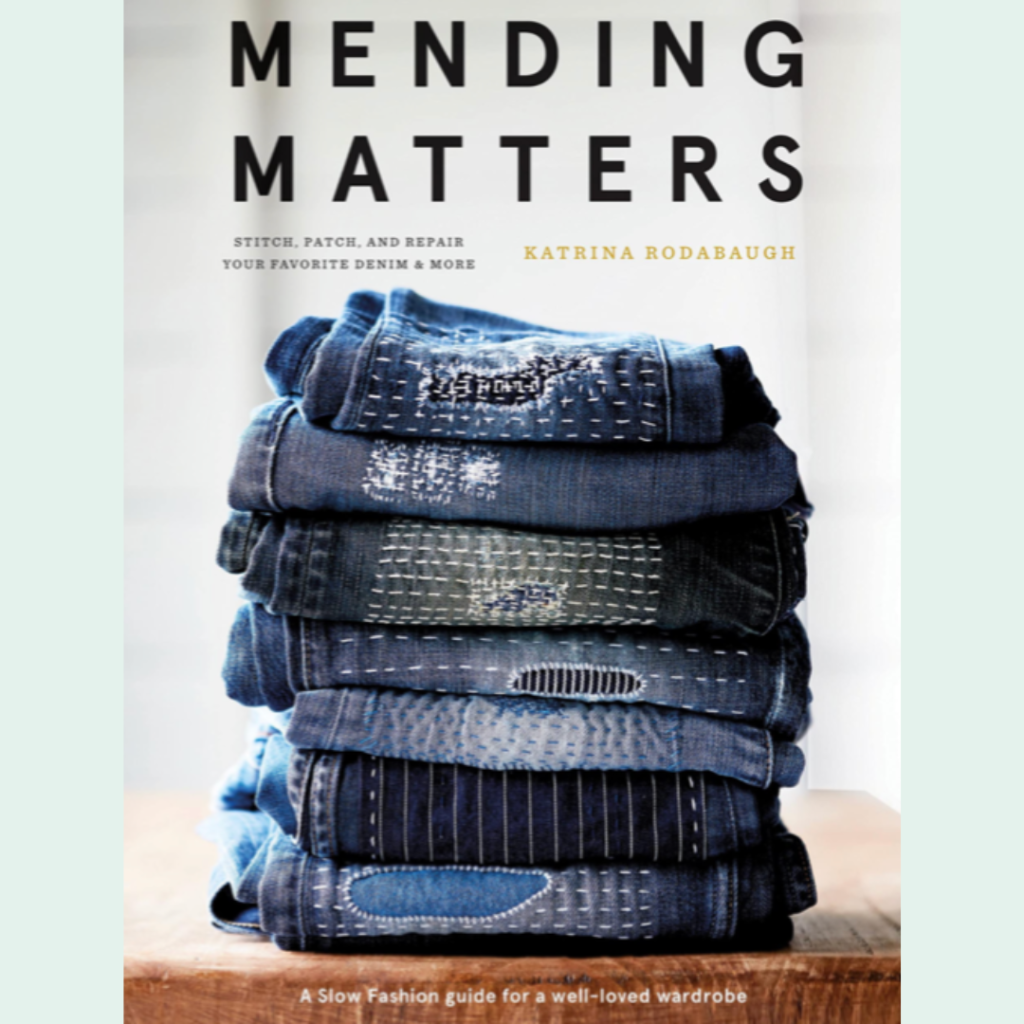
Upcycling has become one of the most used techniques when creating unique pieces with minimal impact on the environment. It consists in taking advantage of products, residues or waste materials with the aim of manufacturing new products or materials of higher quality. One of the experts on the subject of Upcycling is Katrina L. Rodabaugh. In her book Mending Matters, she shares with its readers 22 techniques to mend and repair woven garments such as linen, cotton, silk and denim.
8. Avoid materials that are toxic to the environment
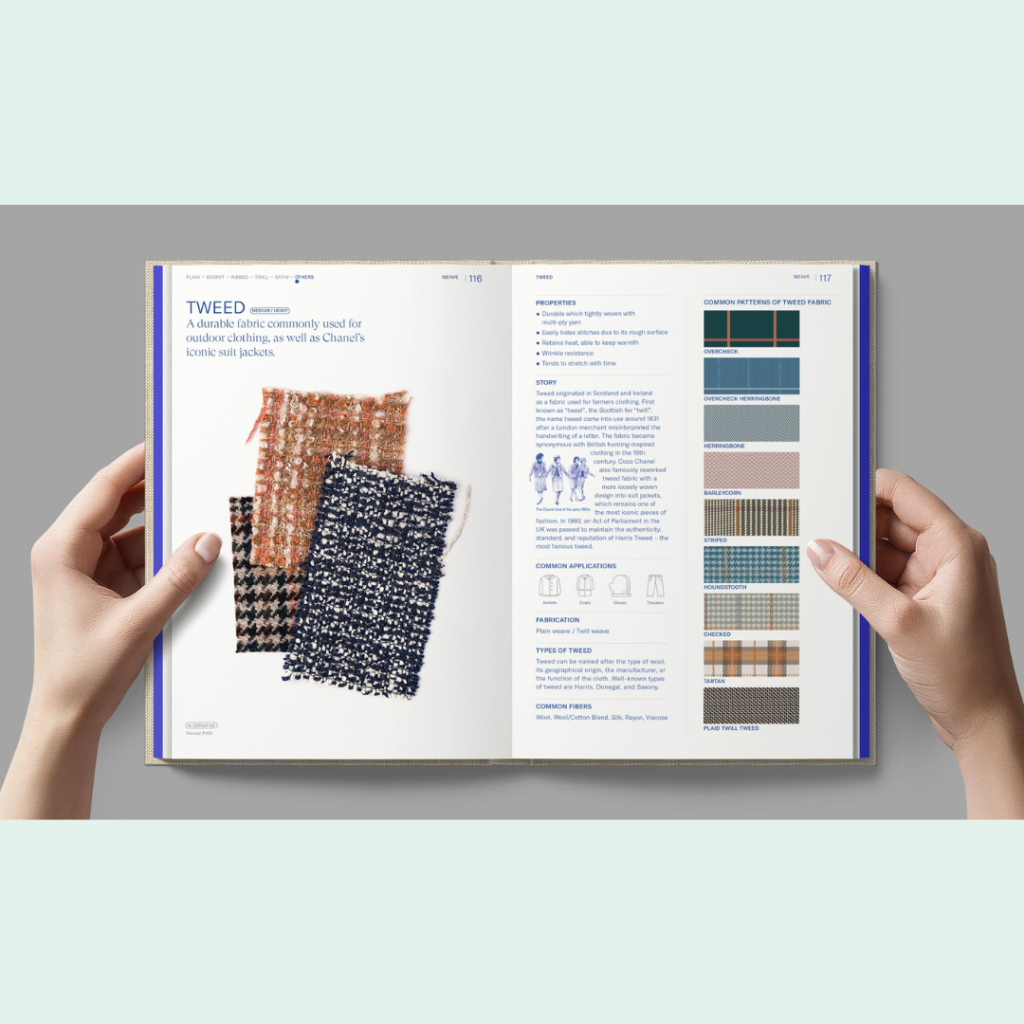
Synthetic fibers are all those textiles that are derived from fossil fuels. If we want to put sustainability into practice, we must strive to stop buying, or minimizing the consumption of, clothes that contain this type of material. Some of these fibers are:
– Polyester: Polyester is a petroleum-based material. It is difficult to recycle and takes years to biodegrade. If we check the labels on our clothes, it is likely that polyester is present in almost all the fabrics of our clothes. Polyester can cause some allergic reactions in certain people, such as itching and redness.
– Acrylics: Acrylics are also petroleum-based and the fibers are highly flammable. It is considered as a replacement for wool. It prevents our skin from breathing properly and can cause skin irritation.
If you want to know more about the fascinating world of textiles, we recommend you take a look at Tommie Hernandez’s favorite guide book: The Textilepedia
9. The new way to wash your clothes
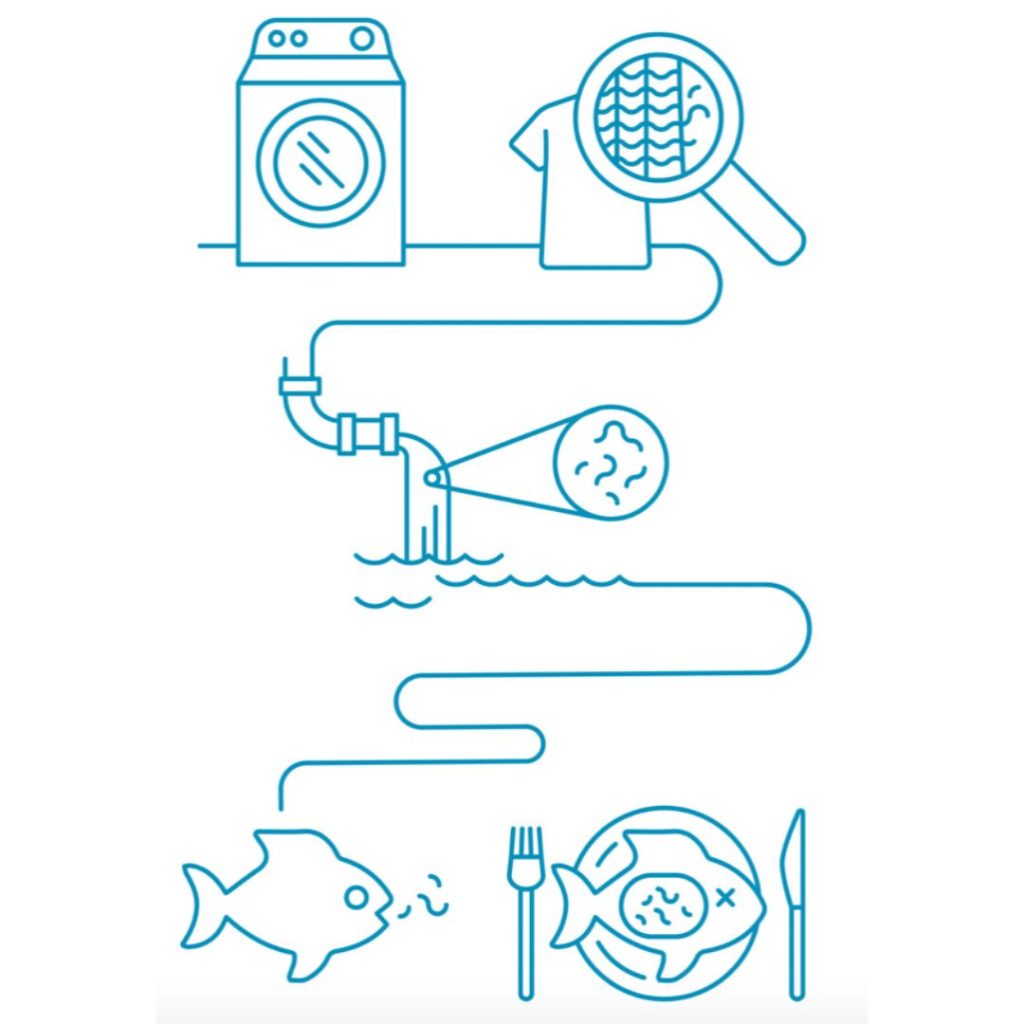
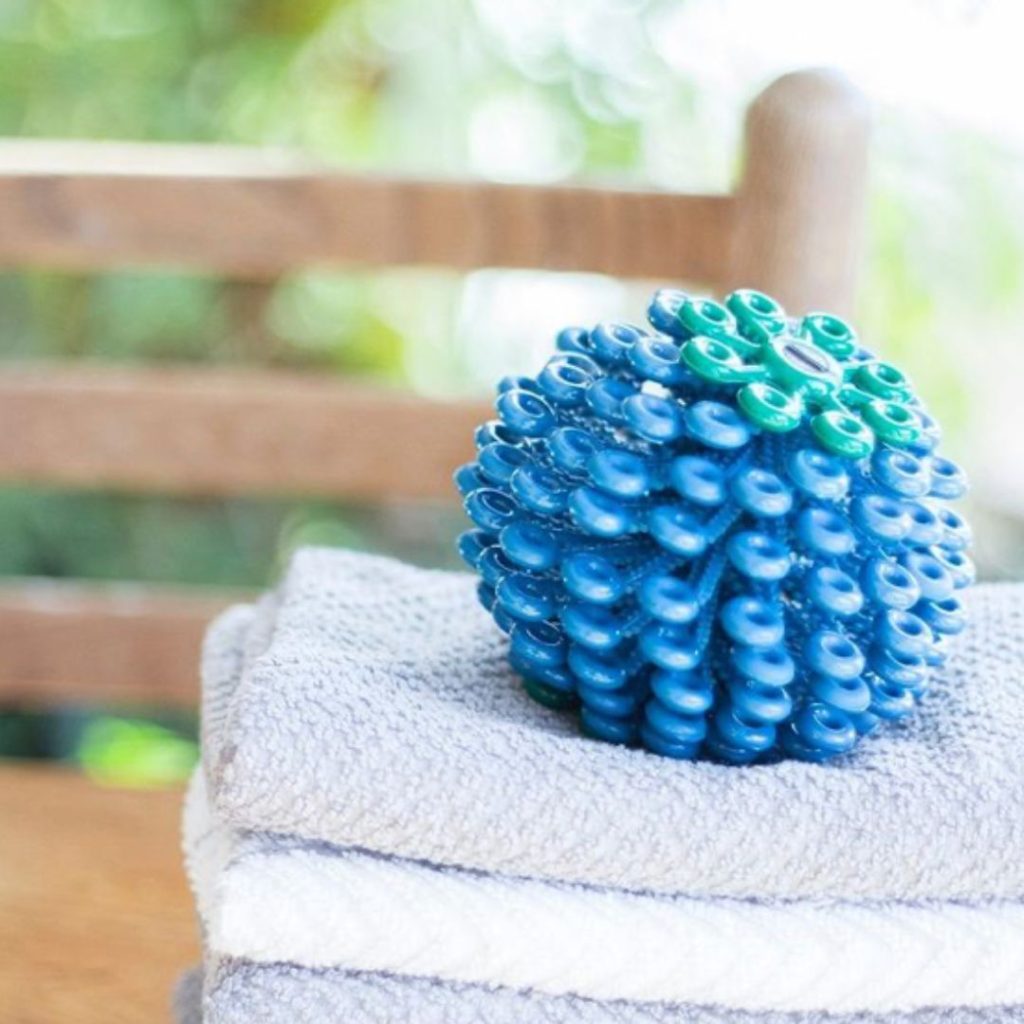
“Every time we wash our clothes, tiny microfibers break off, going down the drains of our washing machines, through sewage treatment facilities, and into our waterways”, explained the creators of Cora Ball. One of the many options that have been developed to prevent the microfibers in our clothing from reaching bodies of water.
10. Make your own clothes
You may feel guilty because you do not carry out some of the alternatives to practice sustainability but no worries! It will take all of us some time to modify some habits of use in our clothes. The good news is that more and more people have joined the practices of sustainability.
Dare to use sustainable fabrics and use the «zero waste» technique making a blouse! Members of our sewing club will learn how to sew the Sitka pattern step by step. As a member of Sirena Elite you have access to exclusive tutorials, a free pattern per month, and more benefits. Join by clicking here.

Until next time!
Mariana Morales
In the month of July at Sirena Magazine we want to raise awareness about sustainable fashion. Laura Fernández, professor and coordinator of the textiles area of the Fashion Design Department at Escuela de Artes Plásticas y Diseño de Puerto Rico (EAPDPR), honored us with her collaboration.
Let's learn a little about Laura and her passion for textiles and sustainable fashion
Laura has been passionate about textiles since she was very young when her mother taught her to weave. This passion has accompanied her throughout her impressive career. Laura has a Bachelor of Fine Arts (BFA) with a concentration in textiles and a Master of Fine Arts (MFA) with a concentration in painting with emphasis on textiles. She also did an internship in conservation, preservation, and restoration of ancient and contemporary textiles, including clothing, at the De Young Museum in San Francisco, California She worked on the production of woven Aubusson tapestries in France
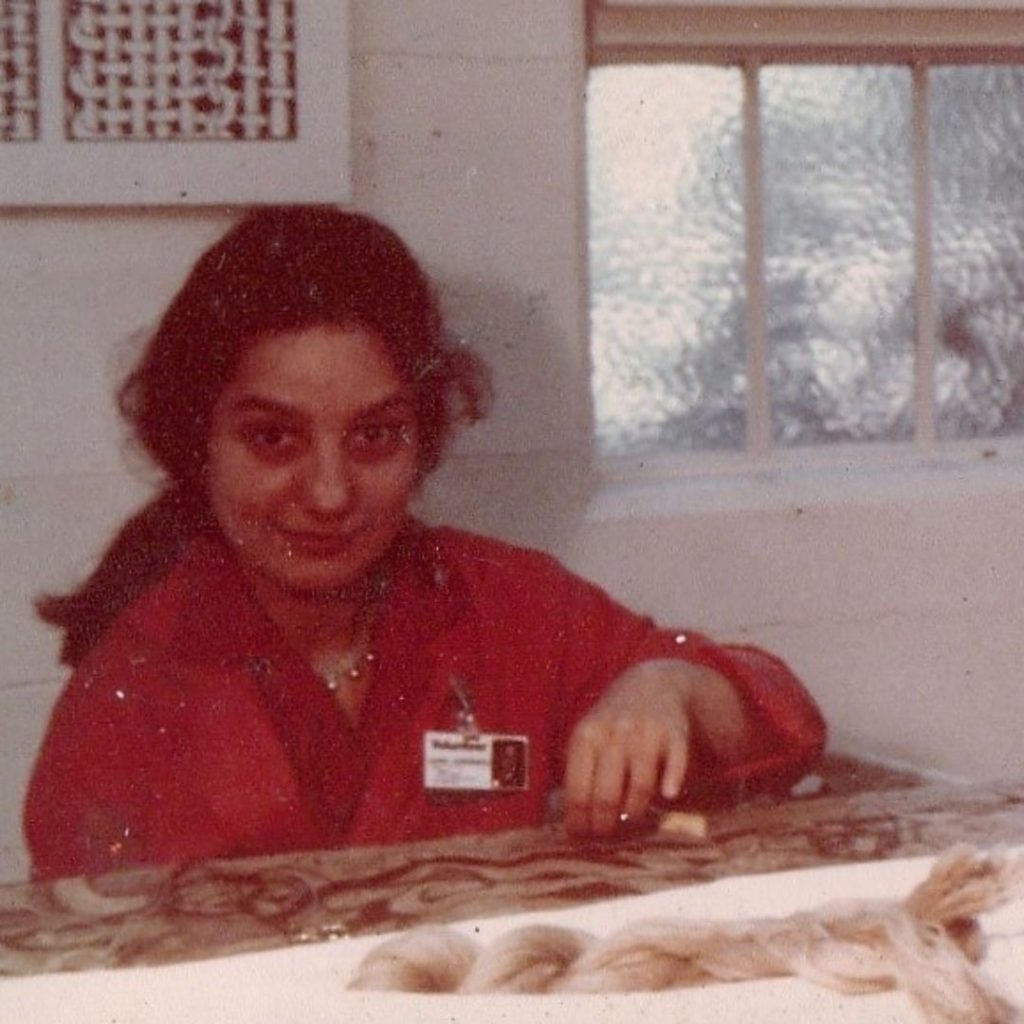
Fig. 1: Laura during her internship at California
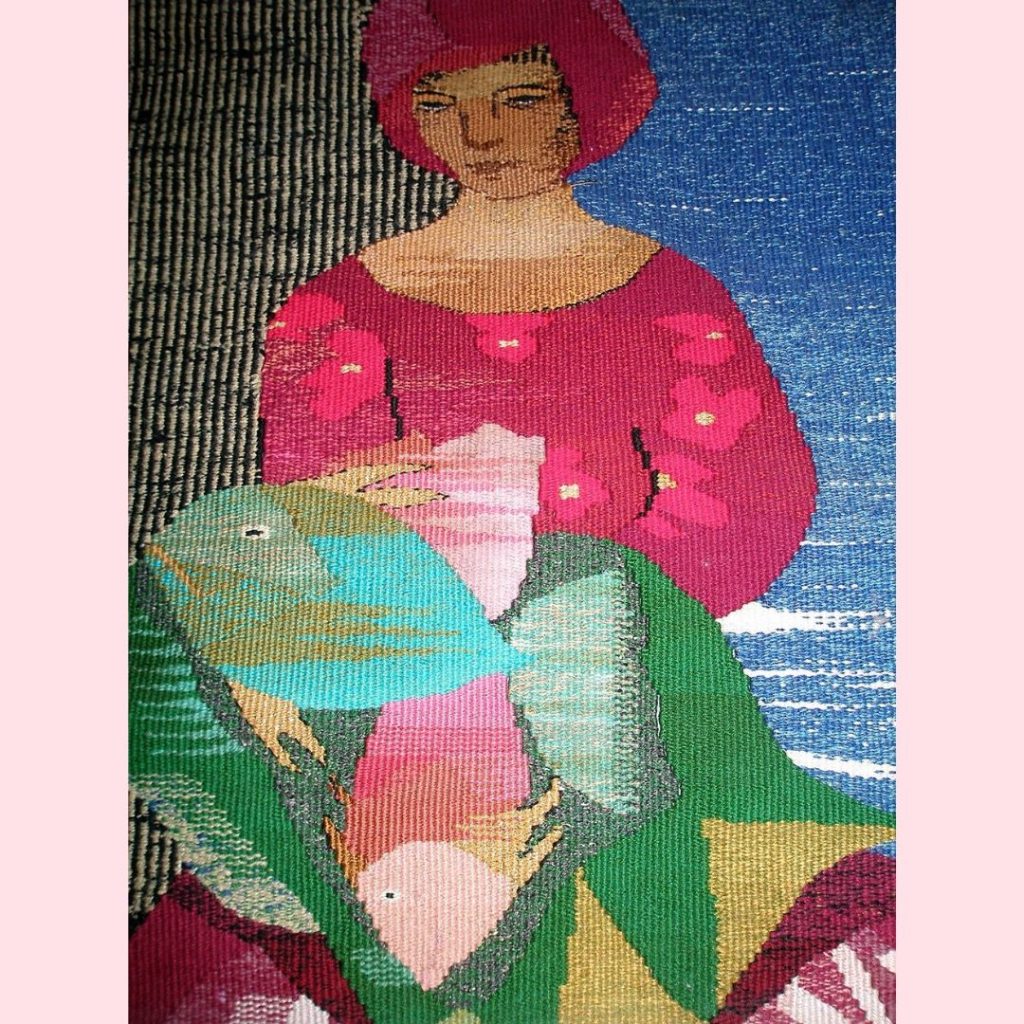
Fig. 2: Woven Aubusson tapestries
She has designed and built textiles for designers in Puerto Rico and California. Her works have been exhibited in museums and galleries including the Interamerican Expo (installation-type piece with soft sculptures and featured in Surface Design magazine as Latin American textile artist.

Fig. 3: Soft sculpture
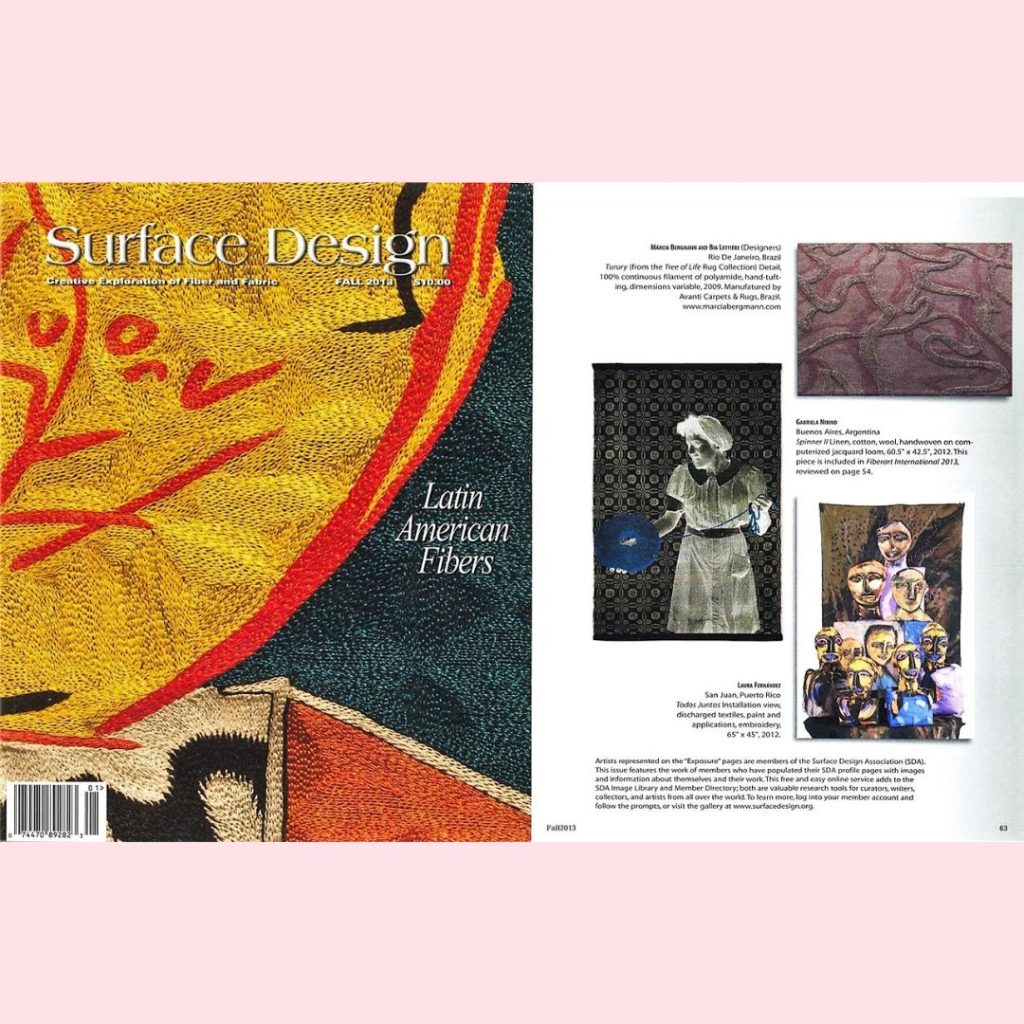
Fig. 4: Surface Design 2013
She has worked on the design, construction, restoration, conservation and preservation of textile objects from private collections and institutions such as the Museum of History, Anthropology and Art of the University of Puerto Rico, Río Piedras (UPR-RP, conservation of Egyptian female mummy), the Puerto Rico Museum of Art (conservation of the Raúl Juliá theater’s mundillo scene curtain), the Armstrong Poventud House Museum in Ponce (piece designed and woven for the museum collection), among others. She was a faculty member of UPR-RP “Taller de Bellos Oficios” where she offered courses in textile techniques and collection management.
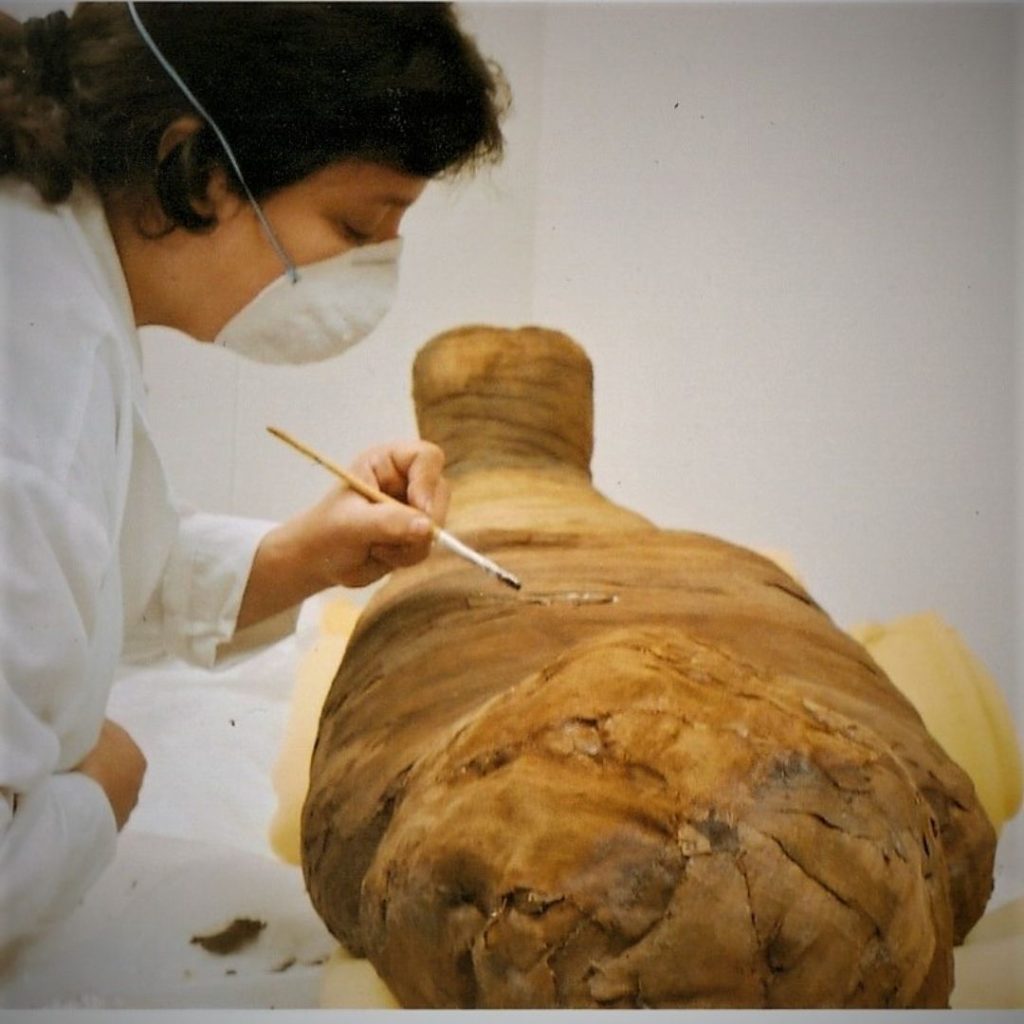
Fig. 5: Conservation of the Egyptian female mummy
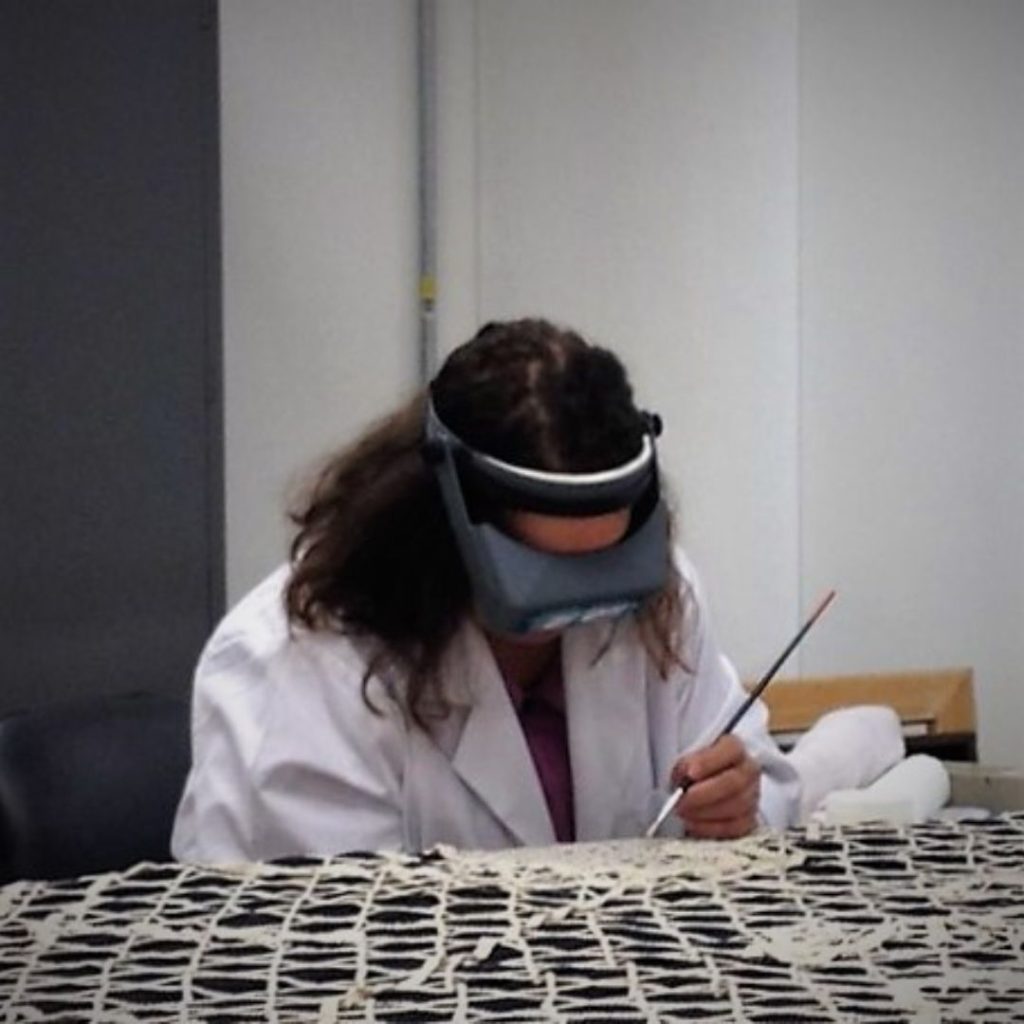
Fig. 6: Conservation of the Raúl Juliá theater’s mundillo scene curtain
Laura developed the curriculum for the minor concentration in textiles for the EAPDPR Bachelor’s Degree in Fashion Design and the Associate Degree in Textile Design (a new offering that will soon be available). It was precisely during the preparation of one of her courses that she began to approach sustainability in a more conscious way.
In addition to being a teacher and being involved in other educational and cultural projects, Laura produces clothing and art pieces worked in mixed textile techniques, including accessories, for her brand Hilo – Hilo
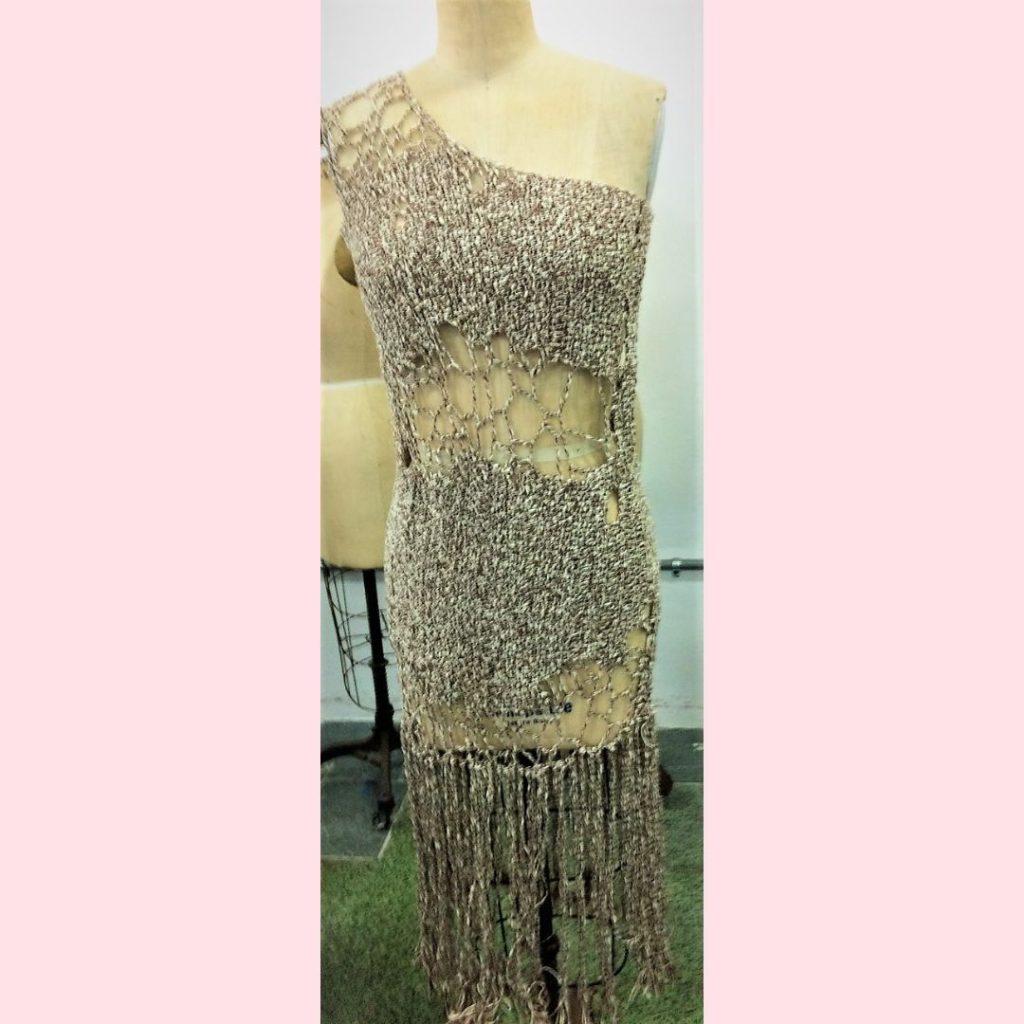
Fig. 7: Knitted dress, Hilo Hilo
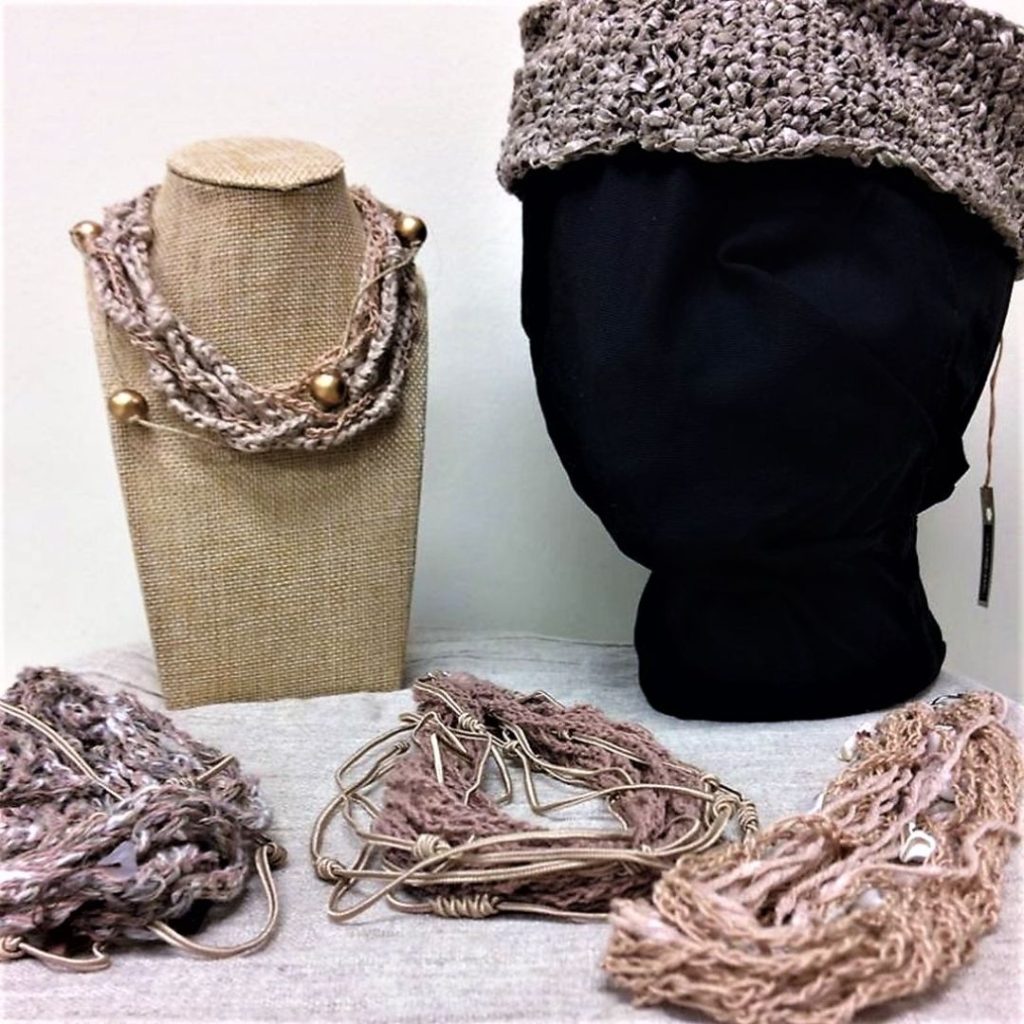
Fig. 8: Hilo Hilo Accesories
Let's talk about sustainability
Sustainability in fashion is a broad topic with environmental, economic and social components. Laura explains that when we talk about sustainable fashion we refer to the construction of clothes with the reduction of the environmental impact throughout the production chain as the main consideration, using more ecological materials and reducing distances to help reduce environmental pollution and the carbon footprint of products, as well as contributing to fair trade with better economic conditions and fair labor treatment for workers.
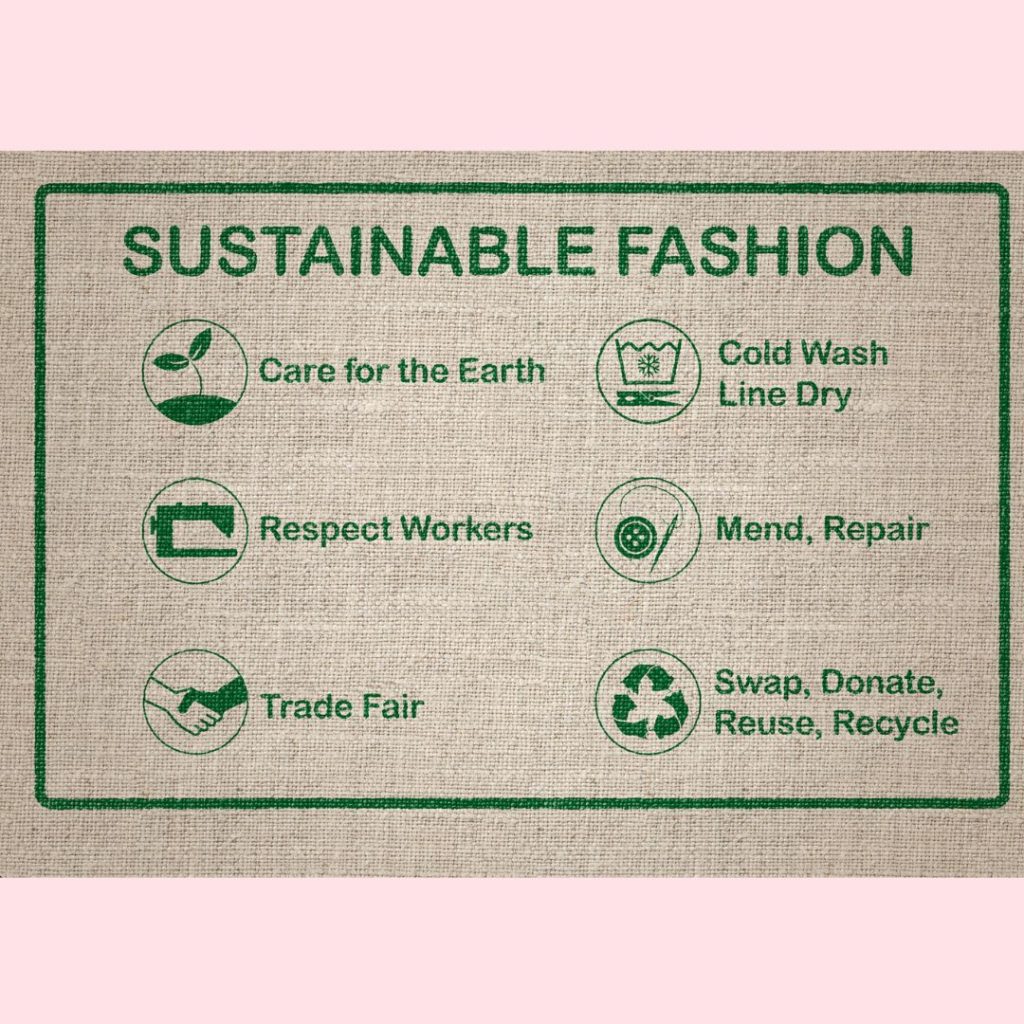
Take for example the fiber used to make a garment. According to Fabric for Fashion The Swatch Book and Textilepedia, fibers are classified as natural and man-made. Natural fibers have been used throughout the history of mankind and among them we have those that come from plants (linen, cotton, etc.) and those that come from animals (silk, wool, etc.).
Man-made fibers were invented in the 20th century as a cheaper alternative to natural fibers. These mimic some of the attributes of natural fibers and are easier to care for. Among these are artificial fibers (organic, semi-synthetic, or regenerated), which are manufactured through chemical processing of a renewable natural organic source such as cellulose (rayon, lyocell, acetate, etc.) and synthetic fibers that are manufactured from petroleum derivatives (nylon, polyester, acrylic, etc.). Different fibers have different properties and purposes.
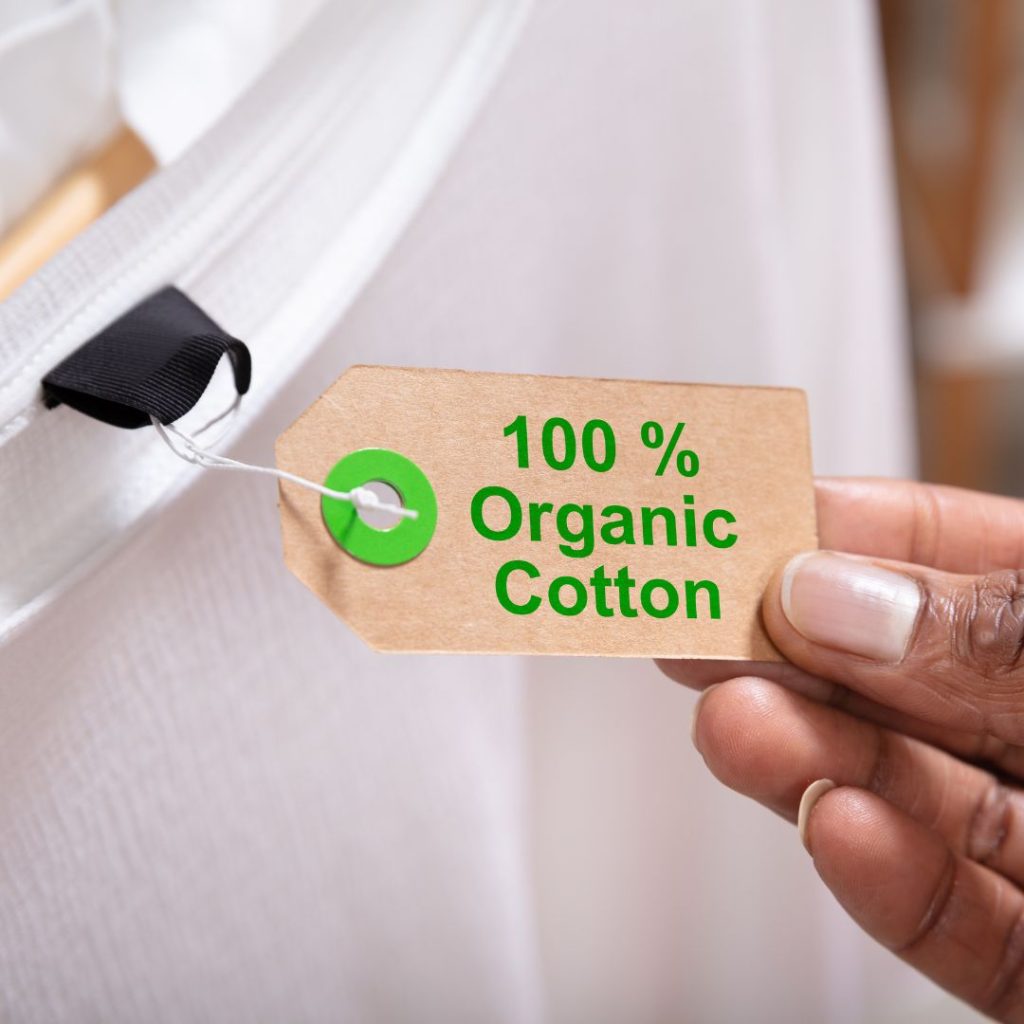
Both the agriculture and processing of natural fibers and the manufacturing and processing of man-made fibers require resources (water, energy, raw materials, labor, etc.) which can be handled sustainably or not. Unsustainable practices such as intensive agriculture, overproduction and industrial pollution have contributed to climate change. Currently, about 67% of textiles come from synthetic fibers. Of the 25% that come from renewable natural sources, such as cotton, only 1% is organic.
This is why Laura emphasizes the importance of educating ourselves on the subject of sustainability. Fortunately, nowadays information is more accessible to everyone through the internet. The common citizen must become familiar with the different types of fibers and their manufacture; read and understand clothing and accessory labels before buying
“Although I try to be a conscious consumer, I managed to continue changing habits. I have always preferred natural fibers and when I choose man-made I prefer artificial ones such as rayon or lyocell.”
Sustainability and textile design
Based on Laura’s experience, textile design allows the development, creation and/or discovery of alternative eco-friendly materials. This can happen both in laboratories (chemical, biological, textile engineering) and in small workshops. The creation of alternative textiles allows reviewing the way natural resources are used and their environmental impact. That is why Laura established an area for research and development in the Department of Fashion Design at EAPDPR, where designers have the opportunity to discover, propose and dare to integrate innovative proposals in their collections.
The textile industry and sustainable fashion
According to Fabric for Fashion The Swatch Book and Textilepedia, the textile industry is becoming aware of its impact on the environment and is developing more sustainable agricultural practices, new technologies and more responsible processing systems that reduce the use of toxic materials, innovative materials with less environmental impact, closed-loop systems for the manufacture of regenerated fibers, sophisticated recycling systems that produce recycled fibers that reduce both the need for virgin materials and the large amount of textiles and other products, such as plastic bottles, that end up in landfills or incinerated.
Laura also indicates that although slowly, within the textile industry there are companies and brands focused on making a difference through their sustainable proposals. We just have to inform ourselves and support them.
In Puerto Rico we have several micro-enterprises focused on sustainable production. Among them is the women’s collective Modo Consciente and Trama which is a project of three young Puerto Rican women who are planting organic cotton, dye plants and other plants. Trama participates in the global organization FiberShed, based in California, through the affiliate Puerto Rico Fibershed. Also, the EAPDPR has a collaborative alliance with Puerto Rico Fibershed.
Sustainability is everyone's responsibility
We all have a role in sustainable fashion and Laura emphasizes that our contribution starts with awareness. If each fashion and clothing sector develops a plan according to its economic expectations and makes the necessary adjustments to work within sustainability, environmental conditions would improve significantly. It is a cycle that begins by selecting eco-friendly materials and produced with conscience and ends after the piece is consumed.
Raw material – design – fabrication – sale – consumption
Although it appears last in the chain, the consumer is a key player in sustainable fashion. If the consumer buys consciously and supports sustainable brands and products, the industry will be forced to provide more sustainable alternatives.
As consumers, we must control the frequency of consumption of new clothes. Buy only when necessary. Do not fall into the vice of buying for the sake of buying («shopaholic»), since this has an adverse consequence by generating surplus clothing that usually ends up in the landfill.
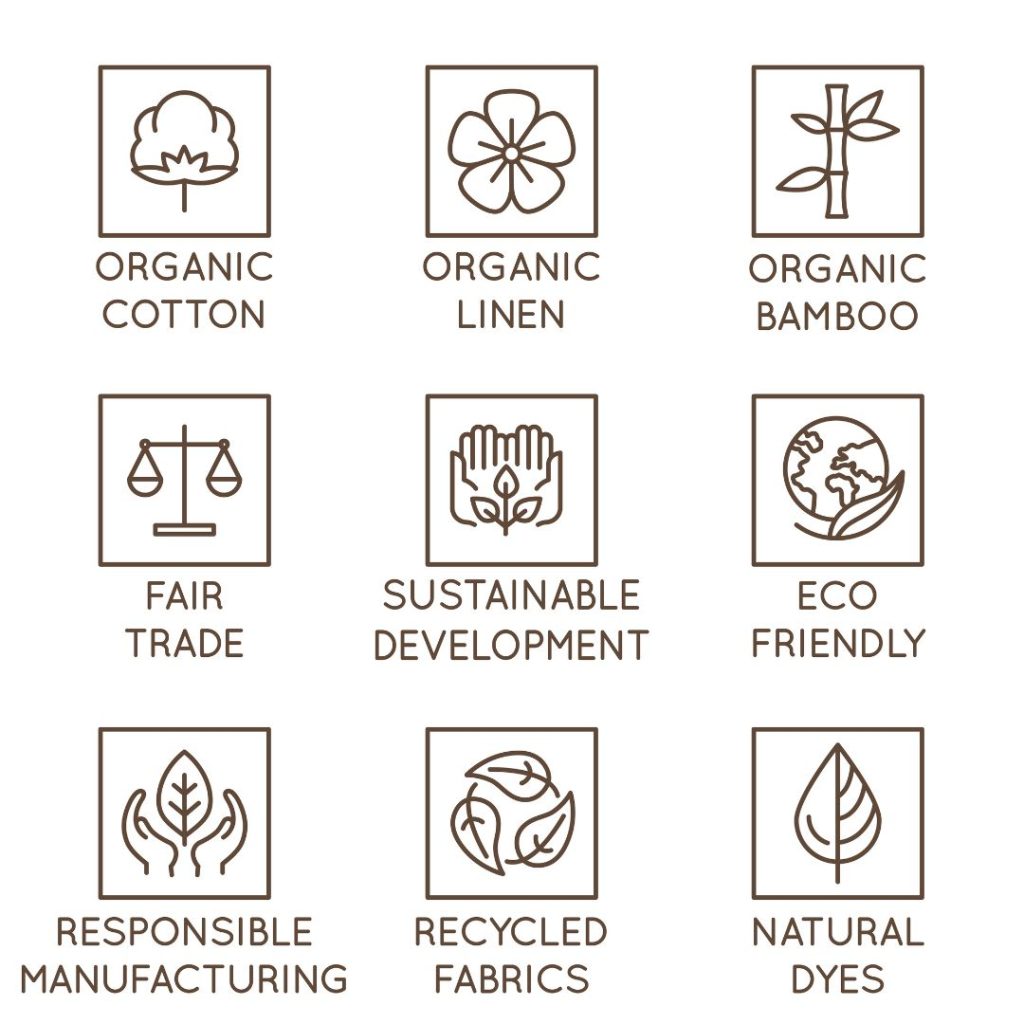
According to Laura, we need to be aware that, in general, our first response as a consumer is aesthetic: “I like it”. As a conscious consumer, we should not make the purchase just because we like it, we should make the best possible purchase decision based on the evaluation of the information provided on the label (fiber content, whether or not it comes from recycled sources, whether it was manufactured under environmentally, economically and socially sustainable conditions.
Laura leaves us with the following call to action: “We must educate ourselves, seek information, and create awareness. Discuss sustainability with other people. Take advantage of family gatherings and talk about these issues. Modify our consumer behavior and consume only what is strictly necessary. If we are going to consume, do so consciously and support local brands and designers who are making a great effort to create sustainably. Practice reusing pieces by transforming them. When sewing a piece, look for patterns focused on zero waste (place the pattern pieces on the fabric in such a way that when cutting the fabric there are no leftovers). We re-educate ourselves and in this way we put our grain of sand in transforming consumer behavior. In short, educate and share information regarding sustainability and practice it within our possibilities.”
Thanks to Laura for her availability and valuable contribution. At Sirena Magazine we echo her call to action. Educating and practicing sustainability within our possibilities is everyone’s responsibility. You can explore the links below to continue learning about sustainability.
Dare to use sustainable fabrics and use the «zero waste» technique making a blouse! Members of our sewing club will learn how to sew the Sitka pattern step by step. As a member of Sirena Elite you have access to exclusive tutorials, a free pattern per month, and more benefits. Join by clicking here.

Until next time!
María Enid Rosa
References
Find out how these pieces became popular!
The bikini and the one-piece swimsuit are the most popular styles of swimwear. But do you know their origin and how they achieved so much recognition? Let’s find out!
The bikini
Throughout the evolution of swimwear as clothing to wear in the water there has always been the concept of a two-piece swimsuit. In part due to material rationing during the Great Depression and World War II, swimsuits continued to diminish in size, leaving more and more skin exposed. By the 1930s, reduced-size two-piece swimsuit designs that left a small part of the torso exposed but completely covered the navel began to appear.
In the late 1930s, designer Jacques Heim designed a two-piece swimsuit that left the torso a bit more exposed than the existing ones, but still completely covered the navel. This design was not very successful by then and was reintroduced in May 1946 as “the atom”, for being smaller than the existing swimsuits. Heim described it as the smallest swimsuit in the world.
Then, on July 5, 1946, designer Louis Réard introduced his version of an even tinier swimsuit, which he called «bikini». It consisted of a two-piece set with each piece constructed with 2 triangles of fabric and some ties. It left most of the body exposed, including the navel. The name referred to the island «Bikini Atoll» in the Pacific Ocean that was used for nuclear military practices with atomic bombs after World War II. The name implied that this swimsuit design was explosive and was going to create a lasting impression, like the atomic bomb, shattering all preconceptions and marking a turning point in swimwear history. Its creator described it as «smaller than the world’s smallest swimsuit», referring to «the atom». The bikini design was so scandalous that no swimwear model wanted to model it and the designer had to use an exotic dancer to present it.
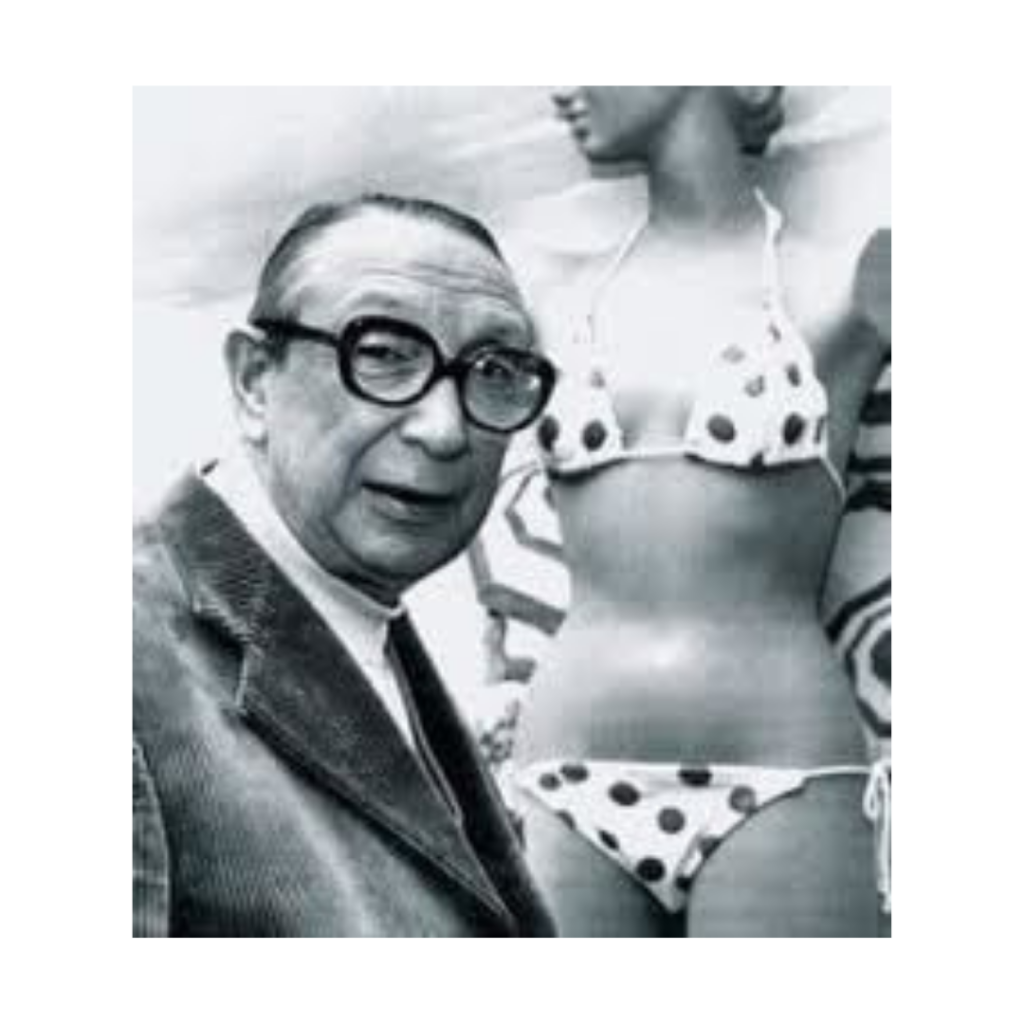
Fig 1: Designer Louis Réard
Although the bikini caused a lot of commotion, its success was not immediate, as many considered it scandalous and was banned in many places. In the 1950s bikinis were used mostly by actresses like Brigitte Bardot, Ava Gardner, Marilyn Monroe, Ursula Andress, Raquel Welch, and Rita Hayworth. Interestingly, in the first edition of the Miss World pageant in 1951, the winner was crowned in a bikini.
During the 1960s, the bikini became increasingly common, aided by its adoption in movies, on magazine covers, the women’s liberation movement, and the availability of textiles containing elastane.
The impact of the bikini on swimwear evolution is such that it is used as the basis for naming other styles of swimwear. Since the bikini is a two-piece swimsuit, the word bikini started to be used as if it was a compound word made up by the prefix “bi”, meaning two (2), and the suffix «kini» with a given meaning of «swimsuit». So, just by changing the prefix, based on the design, a new style of swimsuit was born. This is how the monokini, the trikini, the tankini, and the skirtini, among others arose.
The modern one-piece swimsuit
Also in 1946, designer Rose Marie Reid, known for designing swimsuits for actresses like Marilyn Monroe, and owner of several bathing suit patents, filed the patent for the first one-piece pull-on elastic swimsuit, without zippers or buttons, precursor to the one-piece swimsuit as we know it today.
Rose Marie believed that a woman should feel as well dressed in a bathing suit as in an evening gown, which was reflected in her elaborate and ornate bathing suit designs.
The development of new textiles capable of responding to the need for adjustment, comfort and functionality, dry or wet, was decisive in the evolution of the modern swimsuit. Since the late 20th century to the present day, there is also a greater acceptance of the right of women to choose how to dress and of the diversity of body sizes and shapes. Nowadays, there are as many styles of swimsuits as there are bodies to wear them.
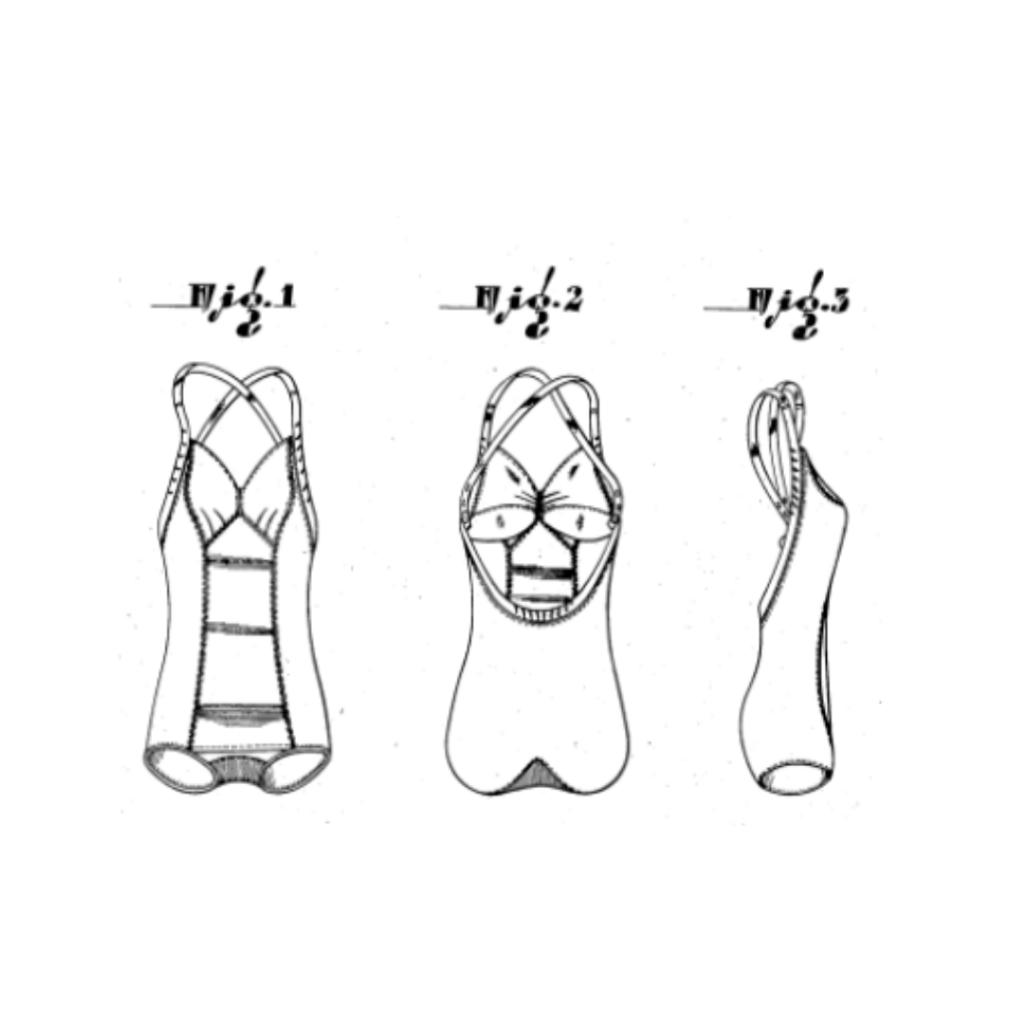
Fig. 2: Images submitted by Rose Marie Reid in the patent for the first one-piece elastic swimsuit without a zipper or buttons.
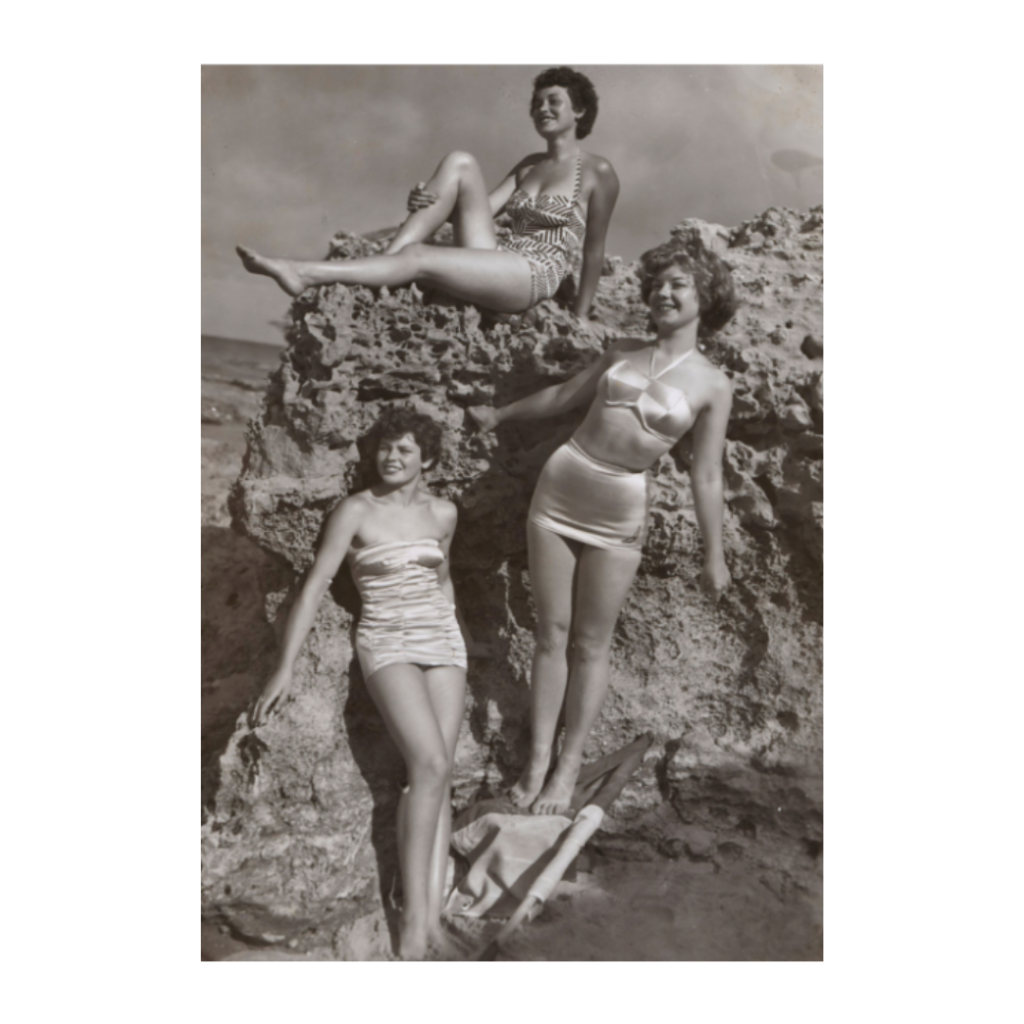
Fig 3: Swimsuits from the 1950's. Photos by Bernice Kopple

Fig 4: Modern swimsuits
The history behind swimsuits is fascinating! Dare to make your own swimsuits to your liking with our new María pattern.
I hope these interesting facts have left you curious to learn more about the swimsuit. If you are interested in learning more, I invite you to visit the links to the references used to prepare this article.
Until next time!
María Enid Rosa
References
Its evolution is as diverse as swimsuits themselves!
If you found the evolution of lingerie in Sirena Magazine interesting, you cannot miss these curious facts about the evolution of the swimsuit. Several everyday aspects influenced this evolution. Let’s explore some of them.
The term “bathing suit” comes from the name of the English city Bath
The term “bathing suit”, dates back to the 18th century and refers to the set of clothing that was used at that time to enter the hot springs of Bath, a city in Somerset, England. Bath was designated by UNESCO in 1987 as a World Heritage Site and in 2021 as one of the Great Spa Towns of Europe and its name refers to the immersion of a body in water.
When these baths were built by the Romans, they were public and clothing was not worn to enter the water. After the fall of the roman empire, the baths fell into disuse and were rediscovered, remodeled and turned into a resort in the 18th century. Its use then was exclusive and, in keeping with the rigors of the time, clothing was required to enter the water. These bathing suits, made with natural fibers, consisted of various pieces, including hair covering and footwear, and covered most of the body to maintain modesty. To prevent them from rising up in the water and exposing women, weights were placed on the hems. These bathing suits were bulky and very heavy when wet.
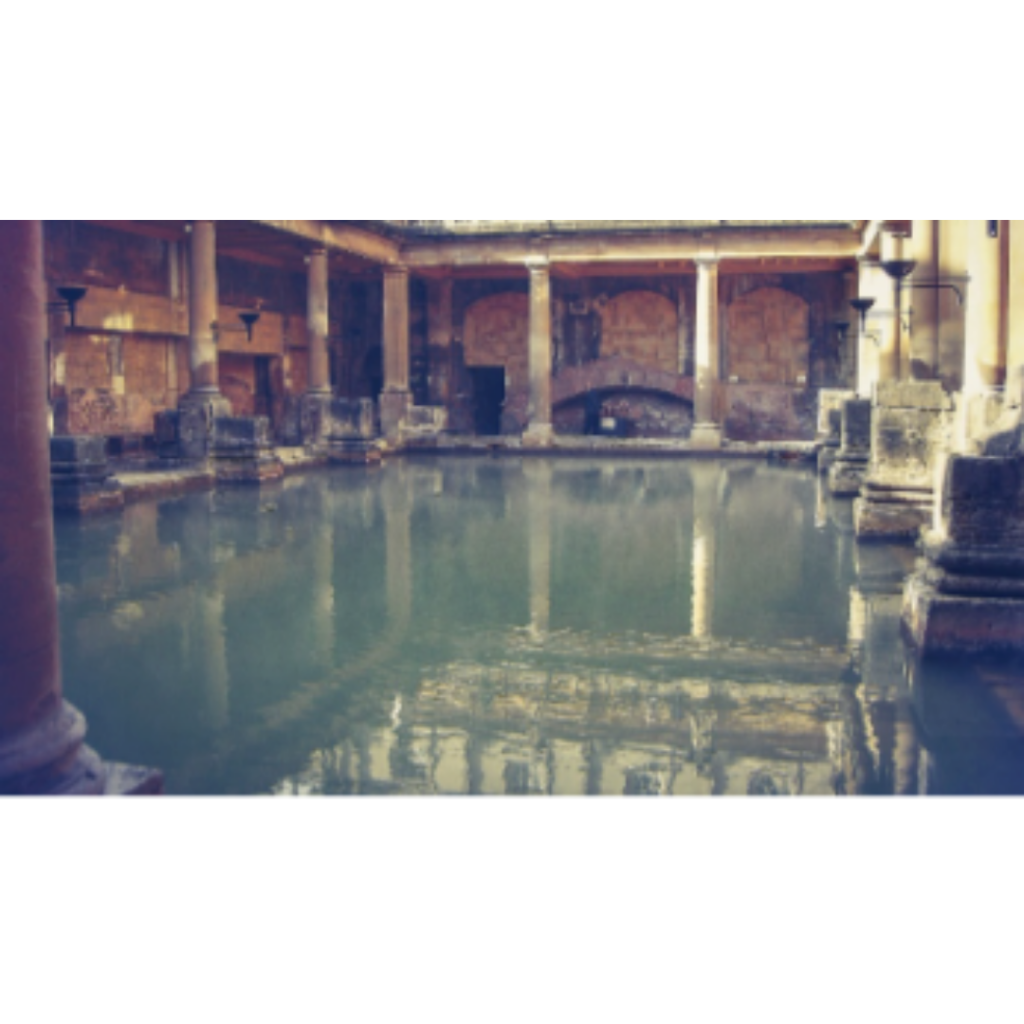
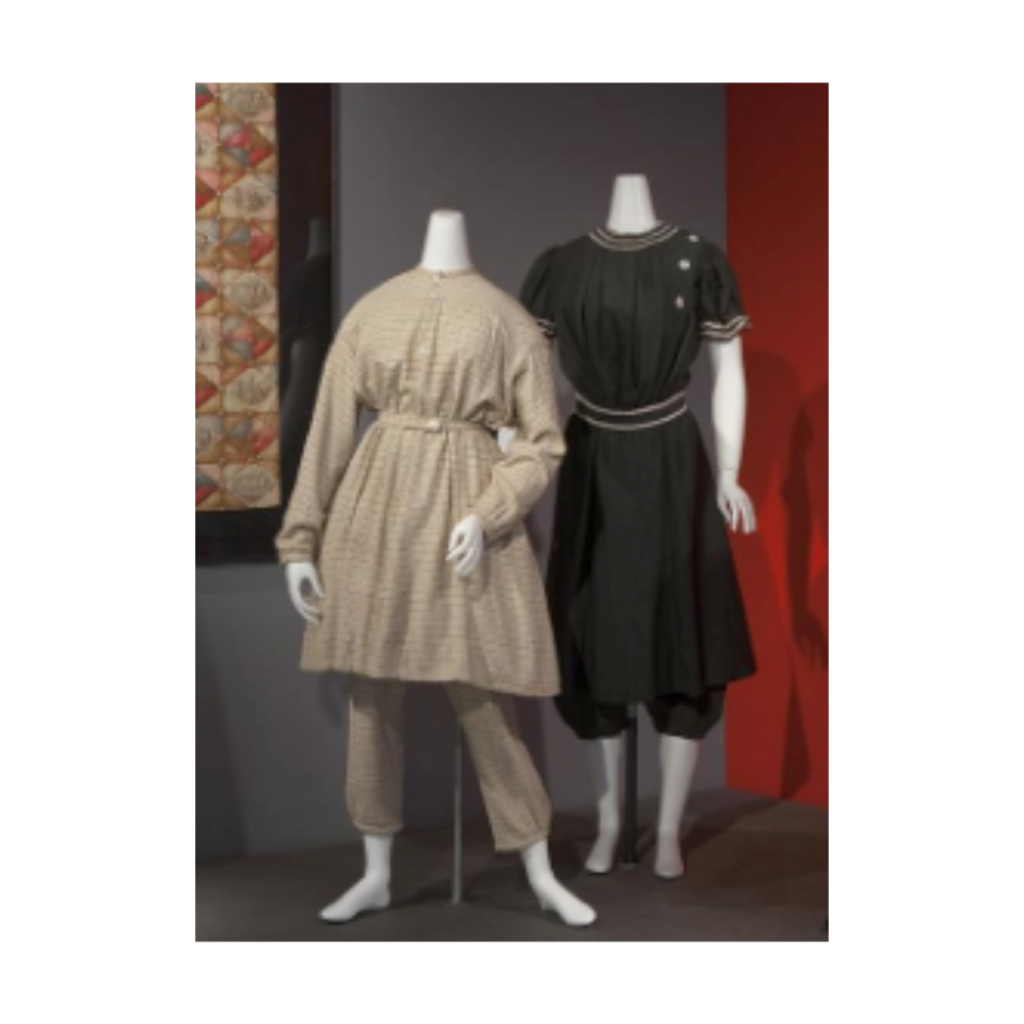
Fig. 2: 19th Century swimsuits presented in the «Sporting Life» MFIT exhibition
In the 19th century, bathing suits lost some volume and became shorter, leaving more skin exposed.Although the cream bathing suit was bulky and covered basically the entire woman’s body, the piece was less bulky than those worn in the 18th century. The black suit is, in turn, shorter, and less bulky than the cream suit and left part of the arms and legs uncovered.
Until the early 20th century, boot-type shoes, with knee-high socks, were part of the bathing suit outfit because being barefoot on the beach was not considered appropriate.
From bathing suit to swimsuit
As swimming became a sport during the 19th century, more people learned to swim and visited beaches, lakes and swimming pools. This caused the clothing to shift gradually from bathing suits to swimming suits. In order to be used for swimming, bathing suits needed to be more comfortable and functional and for this they had to lose a lot of volume, length and weight.
Annette Kellerman, an Australian swimmer, pioneered female swimming in the early 20th century as well as the use of more comfortable and functional swimsuits. In 1907, Annette was arrested for indecent exposure on a beach in Boston, Massachusetts for using a tight-fitting one-piece pantsuit that covered half of her thighs and exposed part of her arms, neck and legs.
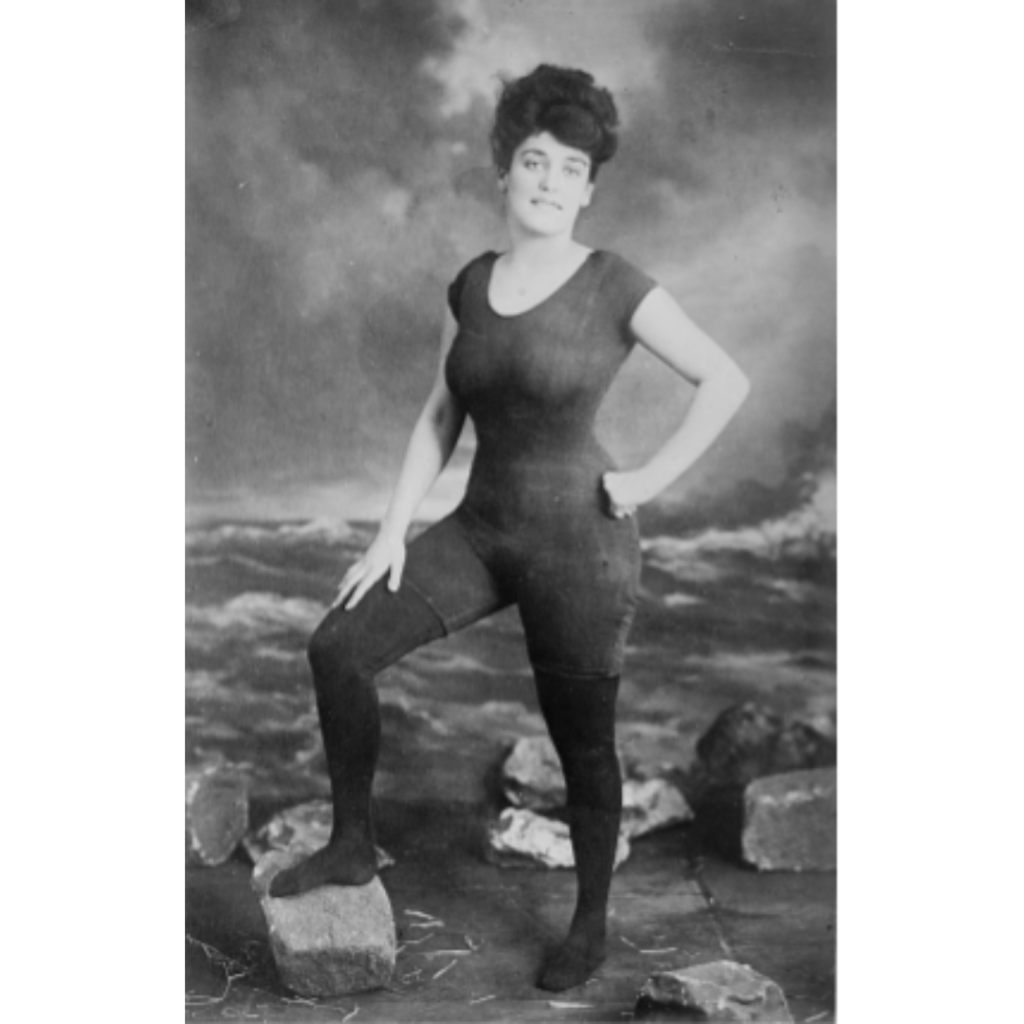
Fig. 3: Annette Kellerman
The length and neckline of the swimsuit was regulated by law
In the 1910s, bathing suits became shorter and tighter. By the 1920s, shorter swimsuits began to be seen, with more pronounced armholes and more striking colors. Since maintaining decorum and modesty was necessary, not every swimsuit style was allowed, and there were rules to be followed. To enforce these rules, there were officials in the beaches with tape measures verifying that the established requirements were met.
By the late 1920s and early 1930s, bathing suits were shorter, had straps and low backs, and were made with more comfortable and less heavy materials.
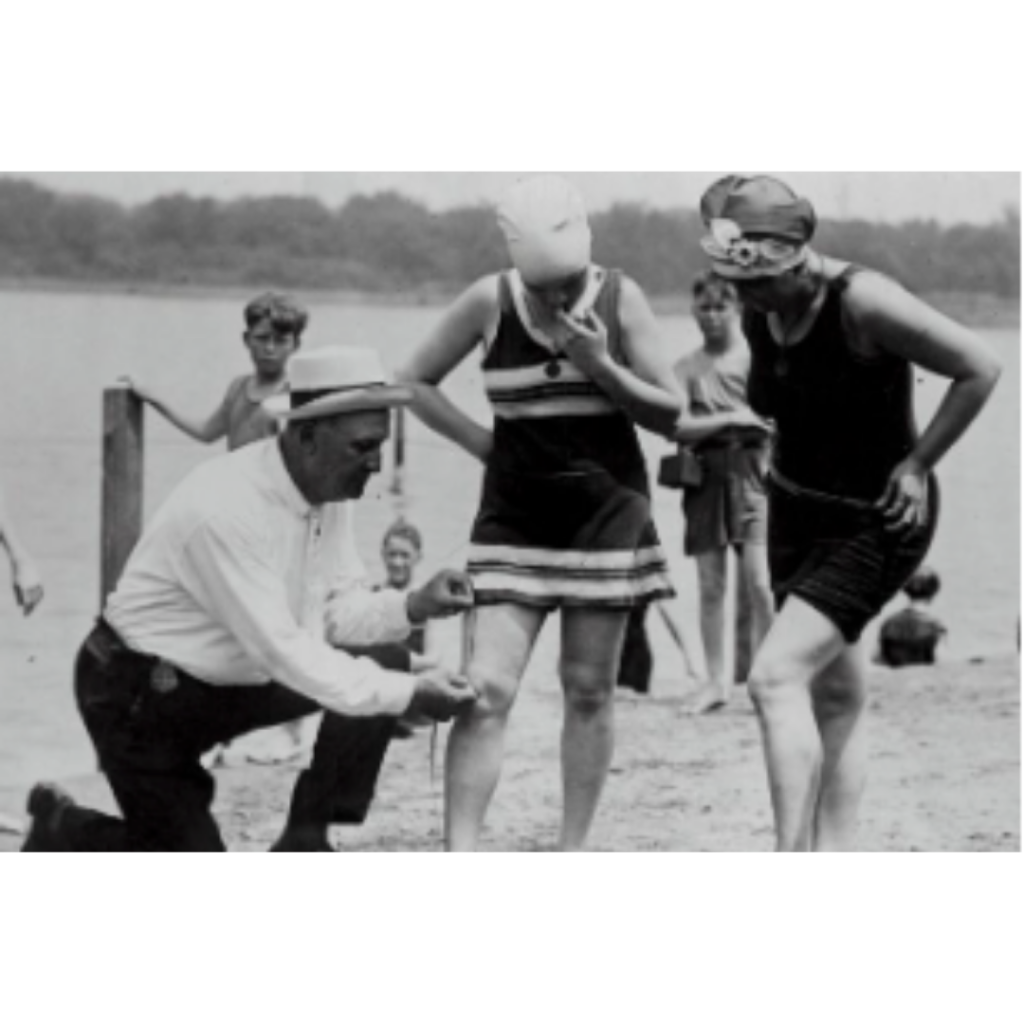
Fig 4: Police measuring the length of a women’s swimsuit at the beach, Washington DC, 1922. Picture from Unsplash
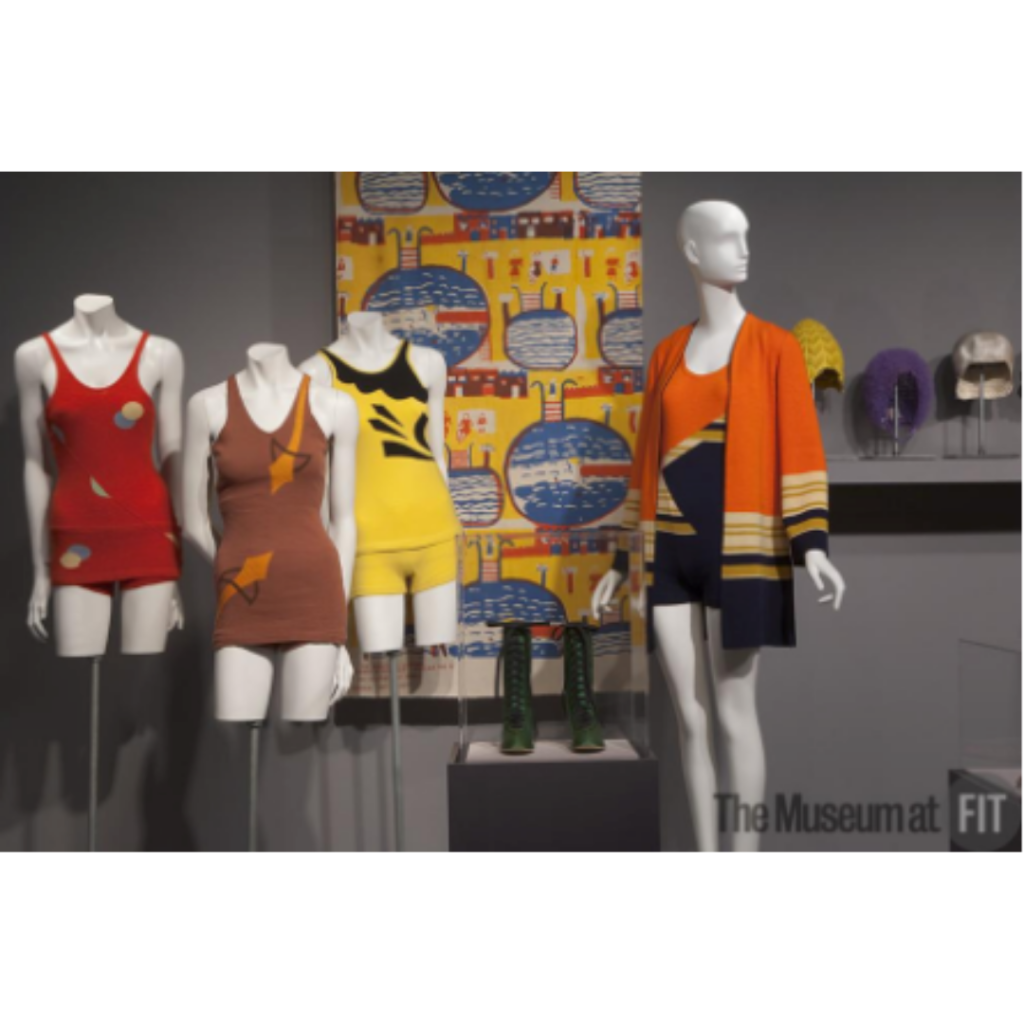
Fig. 5: Swimsuits from the 1920’s and 1930’s, MFIT’s exhibition «Sporting Life«
Newspapers, beauty pageants, magazines, movies and television were key in the evolution of the swimsuit in the 20th century.
As with underwear, social changes, technological advancement, the development of synthetic materials, and the struggles for women’s rights influenced the evolution of the swimsuit. But, unlike underwear, the swimsuit was designed as clothing to be exposed to public view, and its evolution was marked by controversy. Many thought it was indecent to wear such clothes in public. Newspapers, beauty pageants, magazines, movies, and television all played an important role in influencing a shift in thinking about swimwear.
Newspapers were the first to publish propaganda with women wearing swimsuits. Later, the newspapers began to hold beauty contests in their editions by presenting photos of women posing in swimsuits for the readers to select a winner. From here, the beauty contests emerged. «The Most Beautiful Bathing Girl in America» (later shortened to «Miss America») was the first formal beauty pageant and was held in 1921 in Atlantic City, New Jersey. The event intended to expand tourism in the Atlantic City area after Labor Day weekend. The dress code in the activity for both contestants and spectators was to wear a swimsuit. The participants modeled swimsuits and the winner received her prize in her swimsuit.
Over time, other beauty contests emerged that, as part of their appeal, featured the contestants modeling swimsuits. In turn, the controversy over the use of the swimsuit increased since some considered it indecent and others criticized women being treated as if they were an object.
Later in the 20th century, photos of women in swimsuits began to appear on the covers of magazines. Also, actresses wore swimsuits in movies and TV shows. This influenced the demand for this type of clothing and, eventually, the swimsuit became an essential part of a woman’s wardrobe.
I hope these interesting facts have left you curious to learn more about the swimsuit. If you are interested in learning more, I invite you to visit the links to the references used to prepare this article.
Until next time!
María Enid Rosa
References
Did you know that there are several museums dedicated exclusively to fashion?
One of the things I like to do when I’m traveling is to set aside time to visit a museum, especially if there is one dedicated to a subject I am particularly interested in.
The Museum at the State University of New York Fashion Institute of Technology (Museum at FIT or MFIT) is one of these museums dedicated exclusively to fashion and its expressions. And since this month’s theme in Sirena Magazine is underwear, a good way to explore it is from the exhibition “Exposed: A History of Lingerie”. This exhibition was curated by Colleen Hill and ran from June to November 2014 in the Fashion and Textile History Gallery at MFIT.
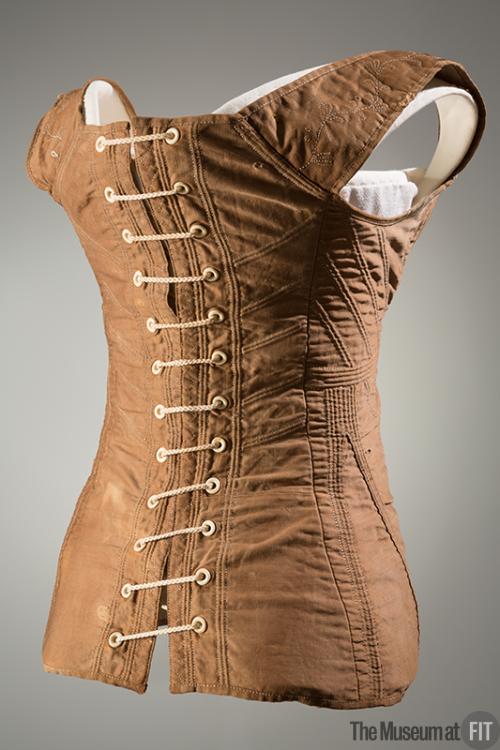
Corset, c. 1815
About 70 underwear garments dating from the mid-18th century to the 21st century were used in this exhibition. These were selected from the museum’s permanent collection which has approximately 500 underwear garments.
Although it is no longer on display at MFIT, we can still appreciate and learn from it thanks to the magic of technology. I invite you to join me in exploring it from the exhibition’s virtual page on the MFIT portal.
When accessing the virtual exhibition page, there are several subpages in which different aspects of the exhibition are presented, such as a short video and photos, information on the book associated with the exhibition, national and international press reviews, social media, blog, and credits.
In the video, Colleen Hill explains what criteria she used to select the garments, and what she wanted to achieve through the exhibition while showing us some of the garments. In the virtual tour we are presented with photographs of 8 of the 70 outfits that were part of the exhibition.
For the exhibition, Colleen Hill chose both structured or hard lingerie and unstructured or soft lingerie garments based on their historical significance, beauty, functionality, versatility and sensuality. Among the selection there are lingerie whose purpose was to be worn under outer clothing such as corsets, voluminous petticoats with a rigid structure (bustles and crinolettes), or without a rigid structure (quilted petticoat), slips, girdles, knickers, panties, bras with structure such as the “overwire” bra, bras without structure such as the “no-bra” bra, and lingerie that combine top and bottom in one piece (corselette, camiknickers, teddy). She also included lingerie to be worn inside the house such as tea gowns, nightgowns, and sleepwear.
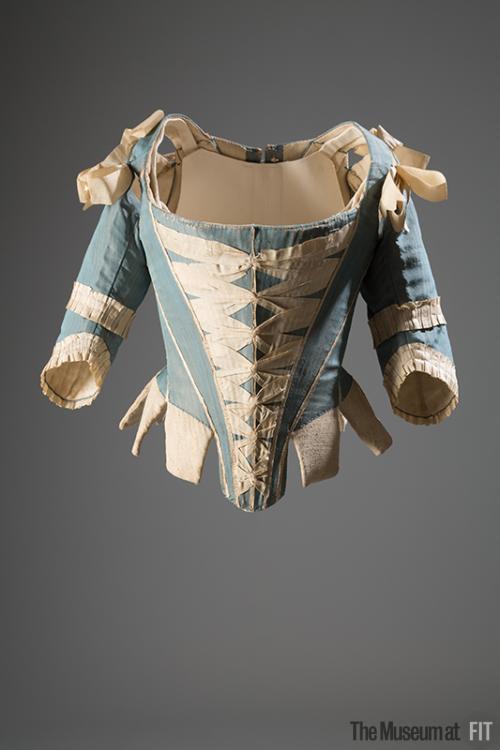
Fig. 1: Corset with sleeves,” 1770, USA. Made of blue silk, white silk ribbon and whale bone.
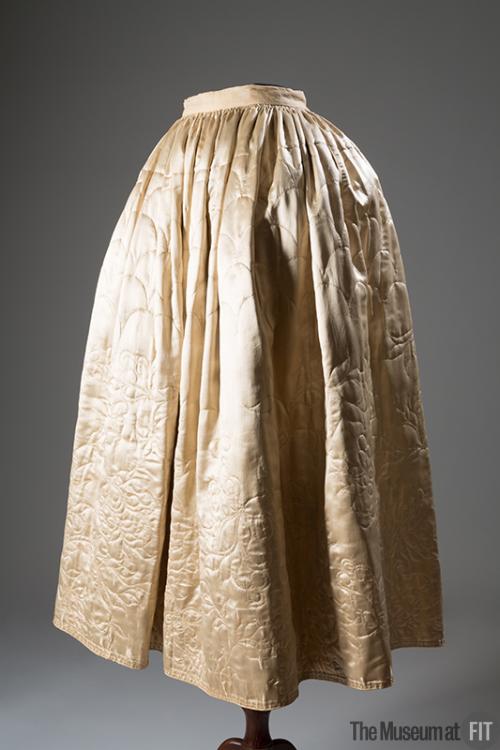
Fig. 2: Quilted petticoat,” 1765, England. Made of silk satin.
The exhibition also introduces us to some multifunctional garments such as a corset with detachable sleeves that could be worn as in house wear in addition to its regular use under a dress (Fig. 1).
There is also an elaborately embellished quilted petticoat that allowed it to be worn as the skirt of an open-front dress in addition to its regular use under a conventional dress (Fig. 2).
This exhibition presents the evolution of fashion over time, taking as its starting point the design, structure, and materials of construction of underwear. However, it does not begin chronologically, but rather presents garments that were used as underwear in the past paired with clothes from the present that share design elements. The intention was to convey, from the beginning, the message that the underwear of the past has been a source of inspiration for the clothes of the present. The exhibition then continues, presenting the pieces chronologically starting with a stiff silk corset dating from 1770 (Figure 1) combined with a quilted petticoat dating from 1765 (Figure 2), and moves on by century and decades of the past and present century presenting the reduction in volume, size and/or rigidity of lingerie garments (Figure 3), ending with an intense sapphire blue lace bra and panty set in a combination of fabrics (Figure 4) that enhances the woman’s body without restricting her movement, freedom and sensuality.
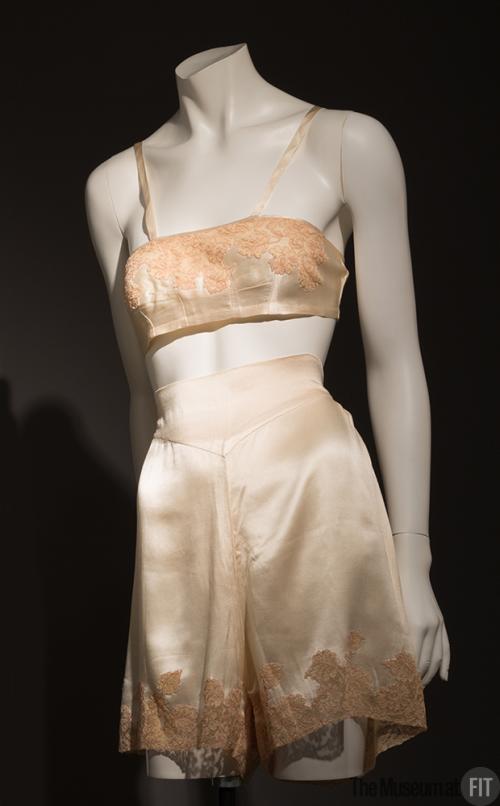
Fig. 3: Bra and knickers ensemble, 1928, USA. Made of silk satin and lace.
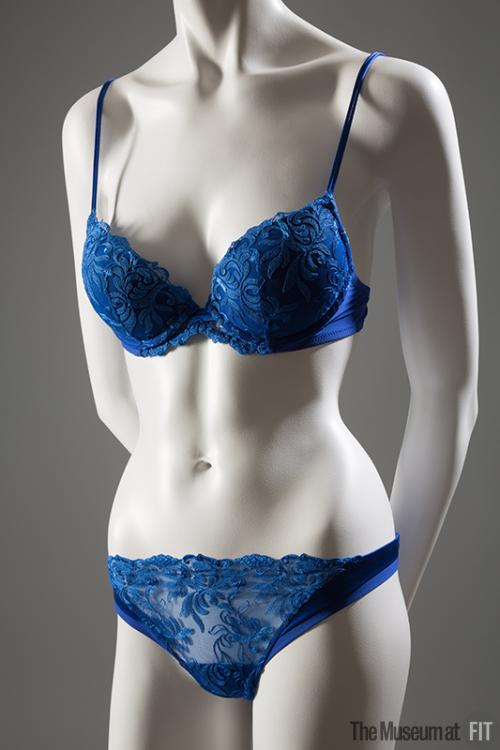
Fig. 4: La Perla bra and panty set, 2014, Italy. Made of silk satin, embroidered tulle and stretch silk satin.
Through the exhibition we can appreciate the technological progress and the transition of textiles from natural fibers to synthetic fibers and the experimentation with different textures, colors, prints and combination of materials. We see how the design, functionality, comfort, versatility and sensuality of underwear changed in line with social changes and the struggles for women's rights.
The 18th century corsets were intended to provide women with the inverted cone silhouette valued at the time. Its construction was rigid and it was essential for a dress and the woman who wore it to look their best. The way it restricted movement. maintained posture, and the difficulty of wearing and removing it, was an important part of the concept of being a woman at that time. Nowadays, it is common to see outfits whose design is based on a corset. However, they are designed to be seen and their purpose is esthetical. Therefore, they are not as structured and limiting as those of the 18th century. This is an example of how the underwear of the past has inspired modern fashion design. It also shows how garments that in the past were not intended to be seen are nowadays designed to be exposed.
Although the MFIT virtual exhibition only features a small sample of “Exposed: A History of Lingerie”, if you are interested in admiring all the lingerie included, you can refer to the exhibition book which has 178 pages and 80 color illustrations. This book, written by Colleen Hill, was published in September 2014 by Yale University Press in collaboration with FIT.
You can also access this link which allows you to explore other objects from the MFIT lingerie collection.
I hope you have enjoyed this virtual visit to “Exposed: A History of Lingerie”. I encourage you to visit other online exhibitions and not to miss the opportunity to visit the MFIT when you visit New York. Until next time!
María Enid Rosa